No decision on Siang dam construction, public consent essential: Arunachal CM Pema Khandu
Pema Khandu said the proposed Siang project remains at the pre-feasibility stage. The assurance addresses local concerns while tying any construction decision to public consent.
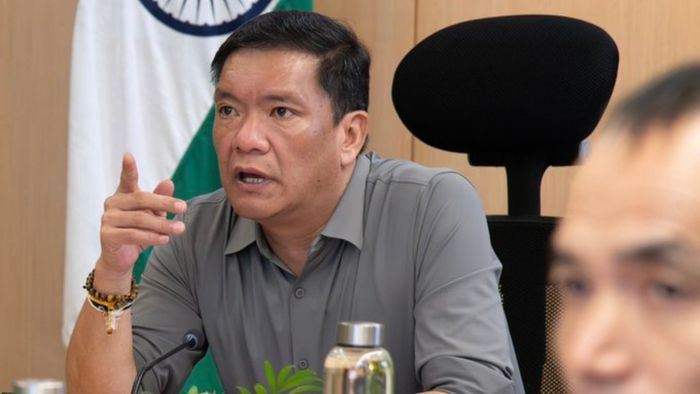
- Nov 02, 2026,
- Updated Nov 02, 2026, 8:16 PM IST
Arunachal Pradesh Chief Minister Pema Khandu has assured residents of the Siang and Upper Siang districts that no decision has been taken by either the state or the Centre on constructing the proposed Siang Upper Multipurpose Project (UMP), stressing that public consultations and consent would be essential before any move towards construction.
Addressing concerns within the Adi community over the proposed project, Khandu said the government was currently considering only the preparation of a Pre-Feasibility Report (PFR), which would examine the project's viability, potential implications and possible alternatives.
"Let me be clear. We are not talking about dam construction at this stage," the Chief Minister said, adding that no decision on construction would be taken without detailed public consultations and public consent.
He said the proposed project had been declared a National Project by the Union government on February 7, 2008, following a decision by the Union Cabinet. It is currently among 16 projects in the country classified as National Projects, he added.
Explaining the urgency behind the feasibility assessment, Khandu referred to reports of China's ongoing dam construction in Medog County, around 40 km from the Indian border, on the Yarlung Tsangpo river. Construction reportedly began on July 19, 2025.
According to the Chief Minister, around 65 per cent of the Aane Siang's water originates in China, leaving the region vulnerable to both sudden surges in water flow and scarcity during the dry winter months.
"Our valley faces real water risks, from sudden and exceptionally high flows arriving with little warning to water scarcity in the dry winter months," he said.
Khandu argued that while India could not influence developments upstream, it needed to prepare for potential risks through scientific and technical assessments. He said the Siang UMP was one of the options that could be examined to identify ways to maintain ecological flow in the Siang River and the Brahmaputra.
The proposed PFR, he clarified, would be an initial assessment rather than an approval for construction. It would help establish the project's basic feasibility, understand its likely consequences and examine other possible options to protect the Aane Siang.
The Chief Minister also said that any eventual decision would have to comply with legal requirements under the Right to Fair Compensation and Transparency in Land Acquisition, Rehabilitation and Resettlement Act, 2013, and the Environment Protection Act, 1986.
Khandu sought to address apprehensions that residents could be displaced or their land acquired without consent, describing such claims as misinformation.
"None of this is true," he said, accusing certain individuals and groups of spreading false information about the project and creating anxiety among residents.
He assured the people that the government would provide clarity through discussions and a clear roadmap, adding that it would not abandon affected communities midway through the process.
Acknowledging the right to disagree in a democracy, Khandu said the government remained open to discussions with residents, public representatives and officials to address concerns surrounding the project.
However, he cautioned against protests turning violent, warning that bandhs, blockades and attacks would only cause hardship to local communities.
"Violence can never be the answer," he said, adding that those who threatened others or took the law into their own hands would be held accountable.
The Chief Minister also appreciated the Arunachal Indigenous Tribes Forum and various community-based organisations for their efforts to promote peace and dialogue in the Siang region.
Appealing to residents of Siang and Upper Siang districts and members of the Adi community to participate in discussions, Khandu said decisions concerning the project would have long-term consequences for the region and future generations.
"Let us find the truth together and decide together, for Aane Siang, for our land and for our future generations," he said.