Over 1500 B2B meetings, 43 foreign buyers: International Tourism Mart concludes in Arunachal's Tawang
The 14th International Tourism Mart (ITM), organised by the Union Ministry of Tourism in collaboration with the Arunachal Pradesh government and other North Eastern States, concluded its main sessions in Tawang on October 30, bringing together tourism stakeholders from 22 countries and 16 Indian states and Union Territories to explore business opportunities and promote tourism in the region.
- Oct 31, 2026,
- Updated Oct 31, 2026, 10:05 AM IST
The 14th International Tourism Mart (ITM), organised by the Union Ministry of Tourism in collaboration with the Arunachal Pradesh government and other North Eastern States, concluded its main sessions in Tawang on October 30, bringing together tourism stakeholders from 22 countries and 16 Indian states and Union Territories to explore business opportunities and promote tourism in the region.
The three-day event, being held from October 29 to 31, witnessed the participation of 43 international buyers from 22 countries, 42 domestic buyers from 16 states and Union Territories, and 81 tourism sellers. Representatives from countries including the United States, the United Kingdom, Australia, France, Germany, Japan, Singapore, South Korea, Thailand and the United Arab Emirates were among those attending the Mart.
A key highlight of the event was the conduct of 1,580 business-to-business (B2B) meetings, aimed at connecting tourism sellers with domestic and international buyers. The meetings provided a platform to develop new tourism itineraries, establish commercial partnerships and expand the market reach of tourism products and experiences across the North Eastern states.
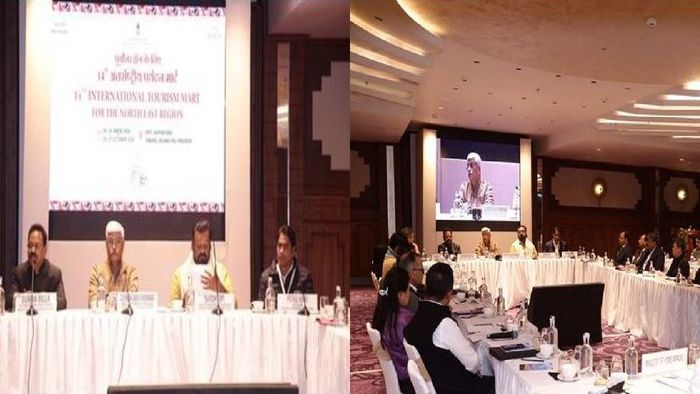
The Mart's deliberations also included a Regional Meeting of Tourism Ministers of the eight North Eastern states on October 30, chaired by Union Tourism and Culture Minister Gajendra Singh Shekhawat. The meeting focused on regional cooperation, tourism infrastructure, emerging opportunities and measures to improve facilities for visitors travelling to the region.
During the meeting, presentations were made on the Centre's Dekho Apna Desh 2.0 initiative and the proposed National Digital Tourism Stack (NDTS). The Dekho Apna Desh 2.0 initiative aims to redirect tourist demand towards lesser-known destinations and reduce pressure on established tourist centres by promoting destinations with tourism infrastructure and facilities.
The NDTS presentation focused on creating a common digital tourism ecosystem to improve the visibility of tourism destinations, facilitate online bookings and provide better market access to local service providers, including tour guides, homestay operators and tourism entrepreneurs.
The discussions also covered the potential of the live concert and events economy in the Northeast, with an emphasis on using music concerts, cultural festivals and other events to attract visitors, encourage longer stays and generate business for local communities.
Another key issue discussed was the Restricted Area Permit (RAP) and Protected Area Permit (PAP) framework applicable to parts of the Northeast. The presentation highlighted the need to simplify application procedures, provide clarity on permit requirements and ensure timely processing while maintaining necessary security safeguards.
Tourism Ministers from all eight North Eastern states — Arunachal Pradesh, Assam, Manipur, Meghalaya, Mizoram, Nagaland, Sikkim and Tripura — shared their views on tourism priorities and regional cooperation.
Earlier, during the technical sessions, Suman Billa, Additional Secretary and Director General of the Ministry of Tourism, highlighted the growth of India's tourism sector and the expanding infrastructure in the Northeast.
He said domestic tourist visits in India had increased from 1.32 billion in 2014 to 4.34 billion in 2025, registering an annual compound growth rate of approximately 11 per cent. The tourism sector currently supports around 89 million jobs and contributes 5.22 per cent to India's GDP.
Highlighting improvements in connectivity, Billa said the number of airports in the Northeast had increased from nine in 2014 to 17, while the region's national highway network had expanded from 10,905 km to 16,207 km.
He also pointed to the region's potential for community-led tourism, particularly through homestays, adventure tourism, eco-tourism, wellness tourism and experience-based travel.
Technical presentations by all eight North Eastern states showcased their tourism attractions, emerging destinations and proposed tourism circuits, highlighting opportunities to attract visitors and expand tourism-related economic activity.
The Mart was inaugurated on October 29 in the presence of Shekhawat, Union Minister of State for Tourism and Petroleum and Natural Gas Suresh Gopi, Arunachal Pradesh Chief Minister Pema Khandu, Sikkim Chief Minister Prem Singh Tamang and other dignitaries.
Addressing the inaugural session, Shekhawat stressed the need to convert the Northeast's tourism potential into sustainable business opportunities and employment for local communities.
The event also featured the North East Bazaar, which showcased traditional handicrafts, handlooms, textiles and regional products. Cultural programmes highlighting the traditions of the eight states were organised for delegates and visitors.
Delegates and media representatives also visited Tawang Monastery, Tawang War Memorial and Urgelling Gompa as part of curated familiarisation visits.
Technical visits to Buddha Park, PTSO Lake and Shernup Village are scheduled for October 31, while post-Mart familiarisation tours for international delegates will begin from Guwahati on November 1. The tours are intended to introduce international participants to tourism destinations and experiences across the Northeast.
The 14th edition also marked the return of the International Tourism Mart to Tawang after 13 years. The town had hosted the second edition of the event in 2013.
The Ministry of Tourism said the Mart was aimed at strengthening domestic and international tourism partnerships, promoting lesser-known destinations and positioning the Northeast as a destination for sustainable and experience-based tourism.