Siang dam protest: Arunachal CM agrees in principle to reduce security deployment, withdraw FIRs
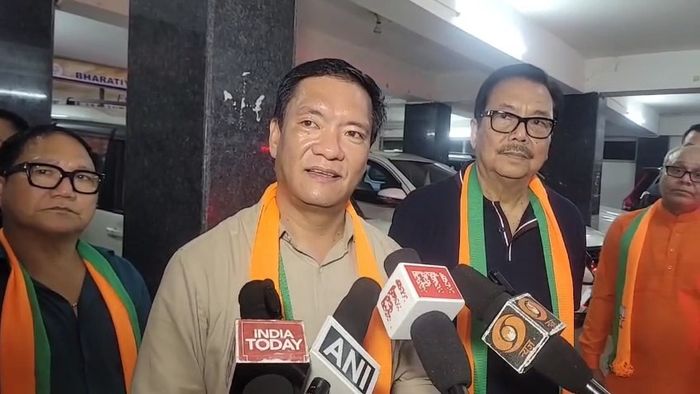
Arunachal Pradesh Chief Minister Pema Khandu has agreed in principle to reduce the deployment of security personnel in the Siang Valley and withdraw FIRs registered in connection with protests against the proposed 11,200 MW hydropower project.
- Oct 13, 2026,
- Updated Oct 13, 2026, 9:04 PM IST
Arunachal Pradesh Chief Minister Pema Khandu has agreed in principle to reduce the deployment of security personnel in the Siang Valley and withdraw FIRs registered in connection with protests against the proposed 11,200 MW hydropower project.
The two measures were among the key demands raised by the Adi Baane Kebang Youth Wing and the Adi Students' Union during a meeting with the chief minister on Tuesday.
In a post on X after the meeting, Khandu reiterated his government's commitment to resolving the dispute through dialogue and mutual understanding.
"Dialogue requires trust and mutual understanding. We remain committed to dialogue, consent and finding a constructive way forward," he said.
The chief minister said he had received requests from the two organisations for a reduction in the number of security personnel deployed in the valley and the withdrawal of FIRs registered during the protests.
"I agree to these proposals in principle as confidence-building measures to facilitate dialogue," Khandu said, expressing hope that the organisations would work constructively to rebuild trust.
The development comes amid heightened tensions in the Siang Valley, where sections of the Adi community have been opposing the proposed hydropower project and the ongoing pre-feasibility report (PFR) activities.
The deployment of security personnel to facilitate preparatory work for the project has intensified the confrontation between the state government and sections of the local population.
Protesters have demanded an immediate halt to survey and PFR activities on the Siang River, along with the withdrawal of security forces from areas likely to be affected by the project. They have raised concerns over potential displacement, ecological damage, threats to their traditional way of life and the risks associated with constructing a mega dam in a seismically active region.
The detention of villagers in Upper Siang has also emerged as a major point of contention. Reports have indicated that four residents of Geku were detained under the Arunachal Pradesh Unlawful Activities (Prevention) Act in connection with the protests.
The Siang Indigenous Farmers Forum (SIFF) and its youth wing have also been at the forefront of opposition to the project-related survey work, maintaining that the concerns of affected families must be addressed before the process proceeds further.
The state government, however, has maintained that the proposed project could promote economic and social development, generate employment opportunities for local youth and strengthen water and energy security.
The government has also cited concerns over China's proposed mega dam upstream on the Siang River as a factor in the project's strategic significance.
It has maintained that the ongoing pre-feasibility exercise is intended to assess the project's viability and does not constitute final approval for construction. Public consultations and further assessments would be required before a final decision is taken.
While Khandu's in-principle acceptance of the two demands signals a possible opening for renewed dialogue, the broader disagreement over the proposed hydropower project remains unresolved.