Siang project will move ahead only if feasibility study gives green signal: Arunachal CM
Arunachal Pradesh Chief Minister Pema Khandu on September 29 said the proposed Siang Upper Multi-Purpose Project (SUMP) will proceed to the next stage only if the ongoing Preliminary Feasibility Report (PFR) establishes that the project is technically viable.
- Sep 29, 2026,
- Updated Sep 29, 2026, 7:27 PM IST
Arunachal Pradesh Chief Minister Pema Khandu on September 29 said the proposed Siang Upper Multi-Purpose Project (SUMP) will proceed to the next stage only if the ongoing Preliminary Feasibility Report (PFR) establishes that the project is technically viable.
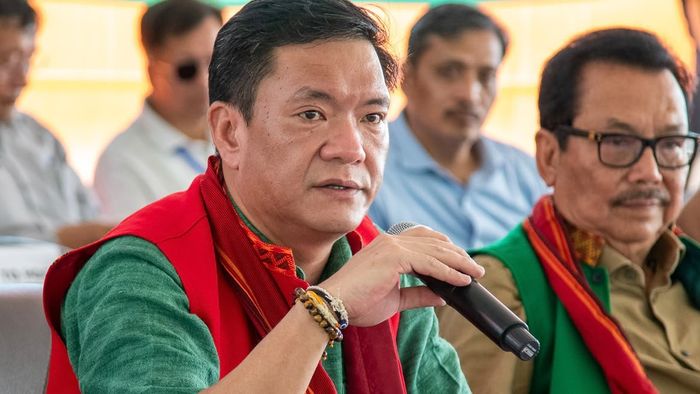
Addressing government officers and officials of Siang district in Boleng, Khandu said completing the PFR was the government's immediate priority and no decision on further work would be taken before its findings are available.
“If the experts determine after the PFR that the project cannot be built, there will be no further process,” Khandu said.
The PFR is expected to be completed over three months — November, December and January — and will examine key technical questions, including whether a structure can be safely constructed in Seismic Zone V, where it could be located and what protection it could provide against a possible release of water from upstream.
Khandu said these issues must be scientifically assessed before the government decides whether, where or how to take the project forward.
If the project is found technically feasible, the subsequent process would include a Social Impact Assessment, Environmental Impact Assessment and preparation of a Detailed Project Report, in accordance with applicable laws and procedures.
Khandu links project to strategic concerns
The Chief Minister said SUMP has implications beyond hydropower generation, including strategic and security considerations.
Referring to a large water infrastructure project announced by China in 2021, Khandu said India and Bangladesh had sought details and discussions with China over the project and water-sharing concerns, but their requests had not been accepted.
He also referred to water-diversion plans in China, including a proposed diversion towards the country's northern dry belt, and said such concerns underscored the need for a scientific and technical assessment of the proposed Siang project.
Assures affected communities of consultations
Khandu said completion of a favourable PFR would not mean that public consultations would be bypassed.
Once a technically feasible location is identified, he said the government would hold discussions with Gram Panchayats, villages and local communities, explain the project in detail and address their concerns.
He said people would have an opportunity to oppose the project through the prescribed process if public hearings and consultations establish that it should not proceed.
The Chief Minister also said land acquisition, compensation, and relief and rehabilitation would be dealt with separately.
Affected villages would be consulted on relocation, including the selection of sites, while landowners would receive compensation according to applicable rules. Relocated settlements, he added, would have to be provided with roads, schools, electricity and water.
Khandu plans extended visit to Siang
Khandu said he would undertake an extensive tour of the Siang region during his next visit to hear concerns directly from residents.
He said he was prepared to spend a week or 10 days in the area and visit villages recommended by local officials and community representatives.
“My duty is to tell you everything. My duty is to listen to your questions. It is our responsibility,” he said.
Khandu estimated that investment in the proposed project could begin at around Rs 1.5 lakh crore and potentially reach Rs 2 lakh crore.
If the project eventually proceeds, he said its construction and associated activities could create employment and business opportunities for local youth in areas such as road construction, quarrying, transportation and the supply of sand and aggregates.
The Chief Minister urged government officers to understand the proposal comprehensively and facilitate public discussions based on clear and accurate information.