A torn Ramayana survives what the Assam floods could not take
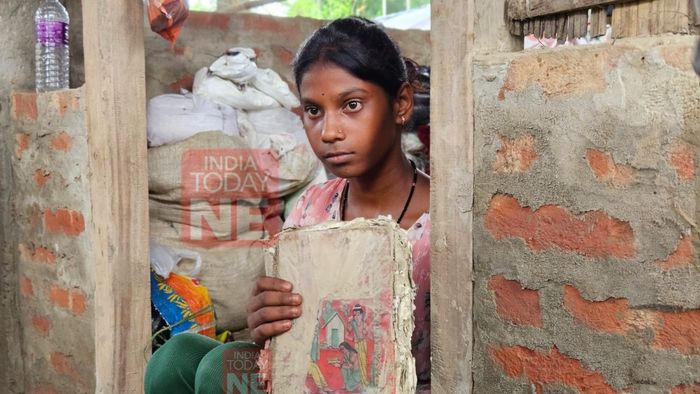
Weeks after floods tore through Bihubor, Anjali Majhi unwraps the only book left in her shelter. The torn Ramayana stands out in a village still waiting for water, schools and normal life to return.
- Aug 04, 2026,
- Updated Aug 04, 2026, 1:52 PM IST
A tarpaulin shelter propped up on bamboo poles is where 16-year-old Anjali Majhi now spends her days, sitting on a narrow threshold with her seven-year-old brother Kartik beside her. Outside, rain falls on Bihubor again. It fell much harder on July 19, when the flood came and did not ask permission.
Bihubor is a small cluster of villages in Sivasagar district, hugging the banks of the Dikhow river. It is the kind of place that rarely makes headlines until the water rises high enough to force it into one. This year, it has.
The floods that swept through Bihubor and neighbouring Nepali Khuti on July 19 have been called among the worst the region has seen in years. Homes filled with mud overnight. Roads vanished under brown water. Families who had never left their villages climbed onto rooftops and waited, some for days, without power, phone signal, or clean water. Cattle drowned. Fields turned to silt. Weeks later, with over a lakh people still affected across the state and dozens of lives lost to the floods this season, many in Bihubor have still not returned to anything resembling normal.
On August 3, the skies opened again. It was ordinary rain, nothing close to July 19 — no wall of water, no rooftop rescues. But for a village still sitting in mud and half-repaired homes, even ordinary rain was enough to bring the fear back.
Inside the shelter, Anjali is quiet at first. Her school bag, like the rest of her belongings, went under water weeks ago. Asked about her books, she does not hesitate. "All my books went away with the water," she says.
Then she reaches for a small bundle sitting beside her, wrapped in a piece of red cloth, folded carefully, the kind of care reserved for something that matters.
"There's one thing left," she says, pulling it closer. She unwraps it slowly. Inside is a book, its cover long gone, its pages brittle and curling at the edges, the corners eaten away by time and now by water. She turns it over in her hands, then looks up at her mother. "This one survived," she says.
A faded image peeks out from one of the surviving pages — a scene from the Ramayana, the colours dulled, grime settled into the creases. Anjali begins wiping it clean with the edge of her sleeve, page by page, careful not to tear what is left.
Nobody in the shelter says much after that. There is not much to say. In a village where school books, ration cards, wedding photographs and the small paperwork of ordinary life were all swallowed by the same water, one torn, half-legible book has come out the other side.
It is a small thing against the scale of what Bihubor and the villages around it have lost this monsoon. Officials in Sivasagar continue to tally damaged homes, dead livestock and submerged farmland. Relief camps remain open across the district. Political visits and disaster fund contributions have followed, as they do every flood season in Assam. None of it changes what Anjali is missing most right now: a working school, and books that are not falling apart in her hands.
For now, she sets the old Ramayana down carefully on a dry corner of the tarpaulin floor, next to her brother. Outside, the rain has not stopped. Bihubor waits, as it has for weeks, for the water to finally leave it alone.