Acclaimed Assamese violinist Minoti Khaund passes away at 85, leaving a rich classical legacy
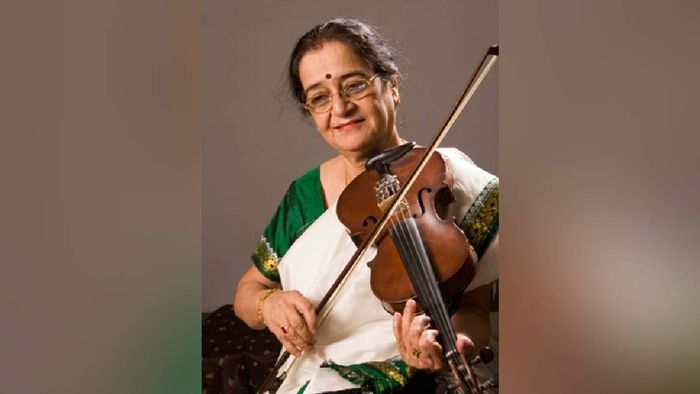
Assam and the Indian classical music fraternity are mourning the loss of eminent violinist Minoti Khaund, who passed away on Sunday, January 18 evening at around 6:40 pm at a private hospital in Guwahati. She was 85. A towering figure in Hindustani classical music, Khaund’s demise marks the end of an era, leaving behind a legacy shaped by discipline, devotion, and artistic excellence spanning over five decades.
- Jan 19, 2026,
- Updated Jan 19, 2026, 8:27 AM IST
Assam and the Indian classical music fraternity are mourning the loss of eminent violinist Minoti Khaund, who passed away on Sunday, January 18 evening at around 6:40 pm at a private hospital in Guwahati. She was 85. A towering figure in Hindustani classical music, Khaund’s demise marks the end of an era, leaving behind a legacy shaped by discipline, devotion, and artistic excellence spanning over five decades.
According to family sources, Minoti Khaund had been undergoing treatment for the past 40 days and had undergone multiple surgeries following prolonged illness. She was suffering from high blood pressure and heart-related complications. Her mortal remains will be kept at the hospital morgue overnight, and the last rites will be performed at the Navagraha Crematorium on Monday, reports said.
Born in 1940, Minoti Khaund’s journey into music began at the tender age of 10, when her maternal grandfather recognised her innate musical inclination and gifted her first violin—an act that would shape her life’s purpose. She received her foundational training under Indreswar Sarma at the renowned Darpanath Sarma Music School in Jorhat, where her early promise as a violinist began to flourish.
Her career reached a decisive turning point in 1972, when she performed at the All Assam Music Conference, earning the attention of legendary violin maestro Pandit VG Jog. Deeply impressed, Jog took her under his mentorship. Under his guidance, Khaund evolved a distinctive style that seamlessly blended tantrakari precision with lyrical expressiveness. She further refined her artistry under Sarod maestro Pandit Buddhadev Dasgupta and imbibed the nuanced “Gayaki Ang” from renowned vocalist Pandit AT Kanan, giving her violin playing a rare vocal depth.
Over a career spanning more than 50 years, Minoti Khaund performed at some of the most prestigious platforms in India and abroad. Her notable appearances included the Rising Talents Conference at Kalamandir, Kolkata, India International Centre, New Delhi, National Gallery of Modern Art and Kala Ghoda Festival in Mumbai, Nehru Centre, London, and multiple Sangeet Natak Akademi festivals. She also upheld the guru–shishya parampara through frequent collaborations with her daughter, Sunita Khaund, taking Assamese classical artistry to national and global audiences.
Khaund’s contribution to Indian classical music was recognised with several prestigious honours. She received a Gold Medal in Master of Music (Sangeet Nipune) from Prayag Sangeet Samiti in 1986, was empanelled with the Indian Council for Cultural Relations (ICCR) in 1990, and was conferred accolades such as the Sangeet Jyoti Award, Silpi Award for her five-decade-long service to music, and an Artist Pension from the Assam Government. Among her creative works, the album “Invocation of Ma”, dedicated to Durga Shakti, stands out as a spiritual and musical milestone, performed widely with her daughter across India and overseas.
Beyond the stage, Minoti Khaund was a committed guru, academician, and cultural thinker. She mentored generations of students, served as a visiting faculty member at a reputed Guwahati music college, and acted as a panel examiner for state-level music courses. A prolific writer, she regularly contributed articles and columns on music, advocating classical traditions as a path to inner peace, cultural continuity, and social harmony.
Minoti Khaund’s life was defined by unwavering dedication to her art. Her violin did more than produce music—it carried tradition, discipline, and emotion across generations. As Assam bids farewell to one of its finest cultural ambassadors, her legacy will continue to resonate through her students, compositions, and the timeless notes she left behind.