Agro-biodiversity fair ahowcases Barekuri’s rich agricultural heritage in Assam's Tinsukia
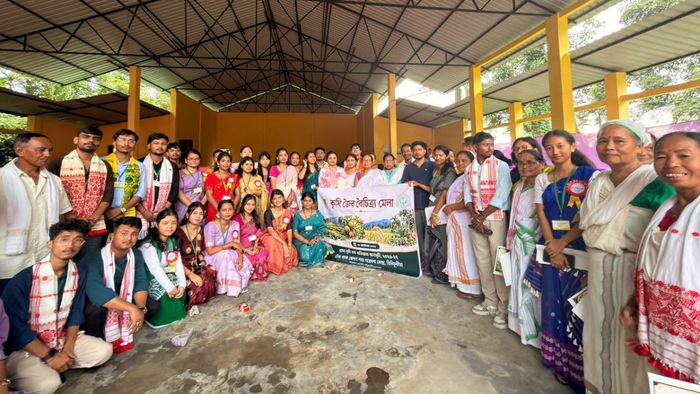
An Agro-Biodiversity Fair showcasing the rich agricultural heritage and indigenous resources of the Barekuri region was organised by students of the Rural Agricultural Work Experience Programme (RAWEP) at Puroni Motapung in Tinsukia on October 31.
- Oct 31, 2026,
- Updated Oct 31, 2026, 5:49 PM IST
An Agro-Biodiversity Fair showcasing the rich agricultural heritage and indigenous resources of the Barekuri region was organised by students of the Rural Agricultural Work Experience Programme (RAWEP) at Puroni Motapung in Tinsukia on October 31.
The fair, organised under the guidance of Assam Agricultural University’s (AAU) Citrus and Plantation Crops Research Station (CPCRS), Tinsukia, saw the participation of more than 60 farmers.
The exhibition featured a wide range of local biological resources, including indigenous leafy and root vegetables, medicinal and aromatic plants, traditional and high-yielding rice varieties, freshwater fish, crabs, traditional fishing equipment and sericulture implements.
Traditional food products and rural entrepreneurship were also highlighted through displays of locally prepared mango and bamboo shoot pickles, along with handmade value-added products made from water hyacinth. Different varieties of tea, including Jasmine Tea, Moran Khilang, Orthodox, Blue, Green and White Tea, were also showcased.
Traditional textile equipment and a collection of floricultural and horticultural plants displayed by Komol Nursery added to the exhibition.
A major attraction was the display of citrus varieties, including Khasi Mandarin, Assam Lemon, Pomelo, Rough Lemon and Acid Lime. Particular emphasis was placed on Khasi Mandarin, a prominent horticultural crop for which the Barekuri region is widely recognised. The display highlighted the importance of conserving indigenous citrus genetic resources and promoting their sustainable use.
The programme was attended by AAU-CPCRS scientists Dr Monuj Gogoi, Dr Priyanka Borbaruah and Dr Jahnabi Hazarika, Sericulture Department official Nripen Padi and former head teacher Khireswar Chutia.
The fair provided a platform for farmers, students and other stakeholders to exchange traditional knowledge, explore the potential of indigenous resources and understand their role in improving rural livelihoods.
For RAWEP students, the initiative also offered practical exposure to documenting local agricultural biodiversity, traditional farming practices and community-based conservation efforts.
The event concluded with an emphasis on conserving and sustainably utilising agricultural biodiversity to support ecological sustainability, rural livelihood security and resilient agricultural development.