Assam: 108 ambulance employees served termination notices following mass protest
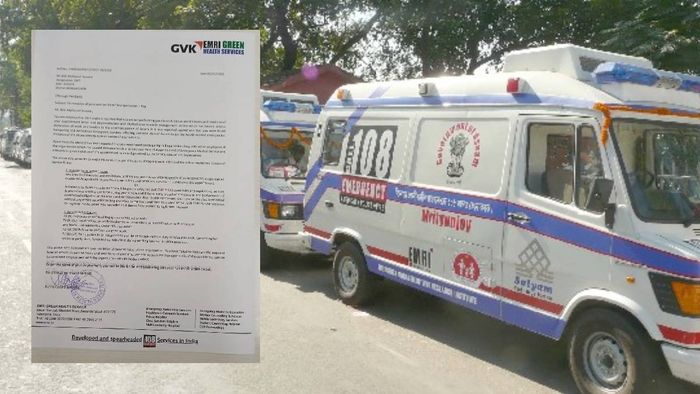
Just days after a statewide strike brought emergency medical services to a standstill, authorities have fired a significant number of 108 ambulance staffers who participated in the protest. The dismissals come from what the department described as “illegal strike action” that hampered emergency healthcare access across Assam.
- Dec 03, 2025,
- Updated Dec 03, 2025, 9:46 PM IST
Just days after a statewide strike brought emergency medical services to a standstill, authorities have fired a significant number of 108 ambulance staffers who participated in the protest. The dismissals come from what the department described as “illegal strike action” that hampered emergency healthcare access across Assam.
In termination letters issued to the striking workers, the concerned department accused the dismissed personnel of insubordination, dereliction of duty, and deliberate disruption of healthcare services. The letters stated that the staff’s "insubordination and disobedience towards management orders" caused “serious dislocation of work and trouble to the common people of Assam.” According to the notice, the participants’ failure to perform basic duties, coupled with their involvement in the strike, amounted to "major misconduct" — warranting immediate termination.
The department specifically stated that the strike significantly hampered the functioning of the 108 Ambulance Emergency Services, thereby severely compromising the ability of citizens to access critical emergency care during the protest period.
The terminations follow an indefinite, statewide strike launched on December 1 by employees of the 108 Mrityunjoy Ambulance Service. Hundreds of workers staged a demonstration at Chachal in Guwahati, with ambulance services coming to a halt in several districts. For many frontline emergency responders — particularly among roughly 3,000 contractual staff — the protest was not sudden. Rather, it was borne out of years of grievances: unfulfilled promises, delayed payments, and lack of job security.
Their demands included regularisation of contractual staff, transition of the 108 service under full government control, wages on par with highly skilled workers, prompt payment of pending overtime dues (especially for 12-hour shifts), annual bonuses, and access to welfare schemes such as Apon Ghar and Seuji Ghar. They also sought compliance with labour laws and assurance of basic employment safeguards.
According to the workers, repeated assurances by government and departmental authorities remained unhonored — leaving them with what they described as “no option but to protest” in order to highlight their plight.
The abrupt strike had a serious impact on emergency medical response across Assam, with citizens in critical condition being left without timely ambulance access. Government officials and healthcare administrators have condemned the strike, attributing to it a lapse in public service delivery and rising risks for patients during emergencies.
As of now, there is no public statement from the dismissed employees about steps to appeal the terminations, or a formal government offer to re-engage or negotiate with the workers. The workers’ long-standing grievances — including calls for service regularisation, fair wages, and labour protections — remain unresolved, intensifying concerns over the future stability of emergency healthcare support in the state.