Assam allows oil palm cultivation on 5 per cent of unused tea garden land
Assam has allowed oil palm cultivation on up to 5 per cent of unused tea garden land. The initiative seeks to expand horticulture, raise farm incomes and reduce dependence on edible oil imports.
- Oct 27, 2026,
- Updated Oct 27, 2026, 8:32 AM IST
Assam has approved oil palm cultivation on up to 5 per cent of unused tea garden land, with the state government aiming to expand horticulture and provide additional income opportunities to farmers.
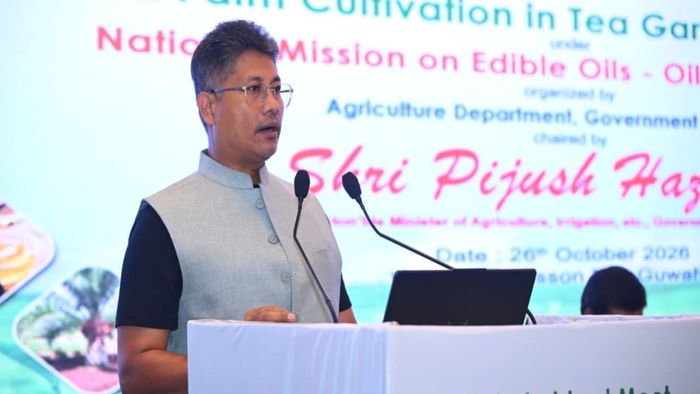
Agriculture Minister Pijush Hazarika announced the initiative at a stakeholder conference on oil palm cultivation in tea gardens, organised by the Agriculture Department in Guwahati on October 26.
Addressing concerns over the crop, Hazarika said misconceptions about oil palm cultivation needed to be cleared, arguing that its water requirements were comparable to those of paddy. He said expanding domestic oil production could also help reduce India's dependence on edible oil imports and redirect the economic benefits to farmers.
The state has set a target of bringing 15,000 hectares under oil palm cultivation and extending irrigation facilities to 30,000 hectares over the next five years. The government also plans to promote multiple crops on unused tea garden land, with particular emphasis on the Barak Valley.
As part of its horticulture expansion plans, the Agriculture Department will provide tea gardens with saplings of litchi, dragon fruit and areca nut. From next year, the government plans to distribute five crore horticultural saplings annually across Assam.
Tea garden owners will also be taken on exposure visits to Andhra Pradesh and Arunachal Pradesh to familiarise them with oil palm cultivation practices.
During the conference, Hazarika said the initiative could offer farmers an income of up to Rs 50,000 per bigha through oil palm cultivation.
Separately, the minister reviewed fertiliser distribution with supplying agencies and warned against overcharging, artificial shortages and practices that place additional financial burdens on farmers.
He said farmers must receive subsidised fertilisers at government-regulated prices and that suppliers could not force them to purchase unrelated products alongside fertilisers.
Hazarika also cautioned against passing additional transportation costs or expenses arising from the distance to railway rake points on to farmers or local retailers. He warned that legal action would be taken against those found exploiting retailers or disrupting fertiliser supplies.
The minister said ensuring timely fertiliser availability and protecting farmers from unfair pricing remained key priorities for the state government.