Assam Cabinet approves appointment of World Cup-winning blind cricketer as physical instructor
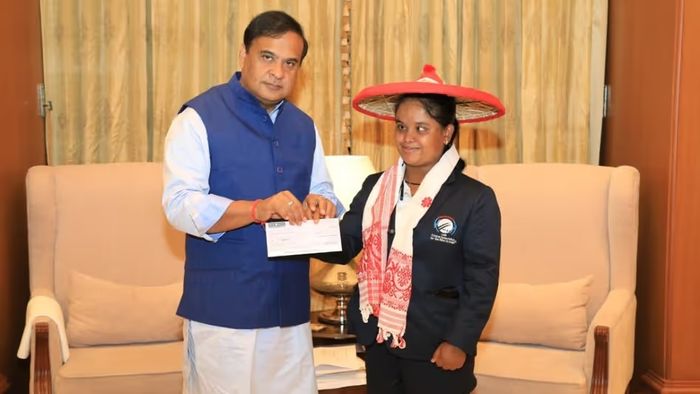
The Assam Cabinet, on December 18, decided to appoint Simu Das, a member of the Indian cricket team that won the Women’s T20 Blind World Cup, as a physical instructor under the Directorate of Sports and Youth Welfare, Chief Minister Himanta Biswa Sarma said.
- Dec 19, 2025,
- Updated Dec 19, 2025, 8:13 AM IST
The Assam Cabinet, on December 18, decided to appoint Simu Das, a member of the Indian cricket team that won the Women’s T20 Blind World Cup, as a physical instructor under the Directorate of Sports and Youth Welfare, Chief Minister Himanta Biswa Sarma said.
Das, who hailed from the state's Nagaon district, played a decisive role in India’s emphatic win at the recently held Blind Women’s T20 World Cup in Colombo, scoring 86 runs and claiming a crucial wicket in the final against Nepal. Her all-round display earned her the Player of the Match award.
Earlier, the state sanctioned Rs 10 lakh for Das, a B1-category player who was part of the Indian squad that won the inaugural Blind Women’s T20 World Cup. The gesture is being viewed as a major institutional step toward recognising achievements in blind cricket, an area that has historically received limited public support and visibility.
Das’s rise has been shaped by years of hardship. Born fully blind and raised in severe financial distress, she grew up without stable housing and carried additional family responsibilities, including care for a brother with multiple disabilities. Despite these challenges, she pursued education and training through programmes run by the Cricket Association for the Blind in India and Samarthanam Trust for the Disabled, eventually earning her place on the national team.
Her performance on the global stage, combined with her personal resilience, has turned her into a prominent figure in India’s blind sports movement. Officials and sporting bodies have described the Assam Government’s backing as a moment that could shift the landscape for disabled athletes, encouraging states to adopt stronger support systems for players who have traditionally remained on the margins of mainstream sport.
Stakeholders in blind cricket noted that the decision could set a precedent for long-term inclusion, improved funding pathways and broader recognition for women with disabilities competing at elite levels.