Assam Congress stages statewide protests against proposed reduction of Kaziranga ESZ
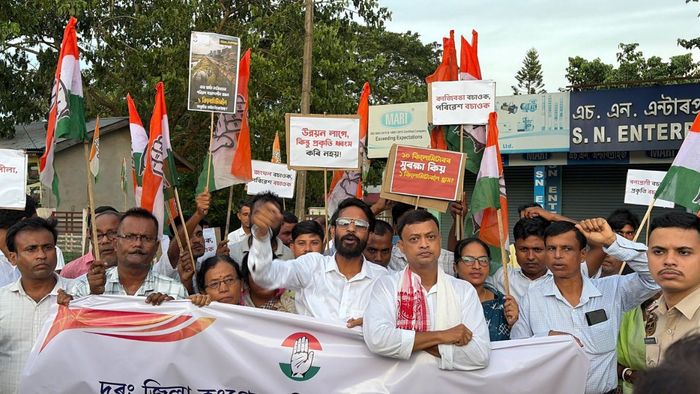
The Assam Congress on August 29 held statewide protests against the state government's proposal to reduce the Eco-Sensitive Zone (ESZ) around Kaziranga National Park, with party leaders and workers taking out padayatras in several districts.
- Aug 29, 2026,
- Updated Aug 29, 2026, 7:04 PM IST
The Assam Congress on August 29 held statewide protests against the state government's proposal to reduce the Eco-Sensitive Zone (ESZ) around Kaziranga National Park, with party leaders and workers taking out padayatras in several districts.
Protests were organised in Sonitpur, Lakhimpur, Hailakandi, Karimganj, Tinsukia, Karbi Anglong and Golaghat, among other places. Congress workers marched through district headquarters, raising slogans against the government and demanding that the proposed reduction of the ESZ be withdrawn.
In Guwahati, Leader of Opposition in the Assam Assembly Wazed Ali Choudhury, former MP Ripun Bora, state women's wing president Mira Borthakur and other party leaders joined the protest.
Police stopped the protesters from marching out of the Congress office in the Dispur area. Party workers subsequently attempted to break through the barricades and proceed onto the streets.
Choudhury said the Congress would continue its agitation until the government reverses the proposal.
"We will not allow the BJP-led government to damage Kaziranga National Park, which is our pride. We will not relent till the decision is reversed," he said.
Bora and Borthakur said the party would intensify its campaign across Assam and create awareness about the proposed changes. They alleged that Chief Minister Himanta Biswa Sarma was compromising the interests of Kaziranga to benefit large corporate entities.
The controversy centres on the Assam government's proposal to approach the Centre for reducing the ESZ around Kaziranga from the default 10-km limit to between 1 km and 3 km.
Under ESZ regulations, commercial activities are prohibited, regulated or permitted subject to prescribed norms, depending on their nature.
Opposition parties and environmental activists have argued that reducing the buffer zone could facilitate commercial mining and tourism activities around Kaziranga and the adjoining Karbi Anglong hills, which also form an important elephant corridor.
Environmentalists have warned that a narrower ESZ could increase human-animal conflict and put additional pressure on the biodiversity of the UNESCO World Heritage Site.
The Assam government, however, has defended the proposal. Sarma has said the move is intended to protect the interests and livelihoods of villagers living within the existing ESZ.