Assam court summons artist Marshall Baruah in Bharalumukh protest case
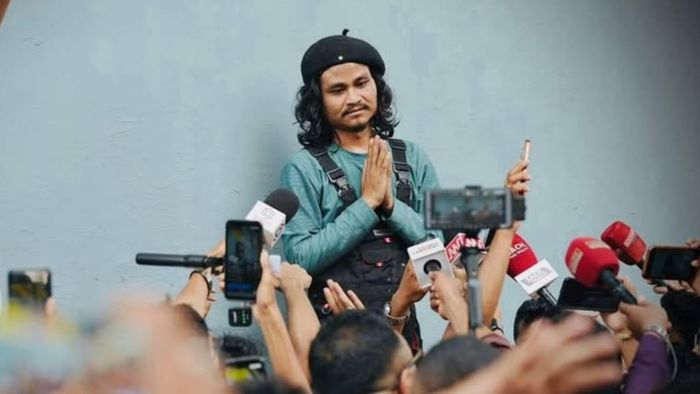
Artist Marshall Baruah and youth leader Ankuman Bordoloi have been served court notices directing them to appear before the court on June 25 in connection with a case arising from protests linked to the felling of trees at Bharalumukh in Guwahati.
- Jun 19, 2026,
- Updated Jun 19, 2026, 5:58 PM IST
Artist Marshall Baruah and youth leader Ankuman Bordoloi have been served court notices directing them to appear before the court on June 25 in connection with a case arising from protests linked to the felling of trees at Bharalumukh in Guwahati.
The two were arrested during demonstrations against the tree-cutting drive, which had triggered widespread public concern and criticism from environmental activists and civil society groups.
Following their arrest, Baruah and Bordoloi spent 14 days in judicial custody after Assam Police booked them under non-bailable sections. The case reportedly included charges relating to criminal conspiracy to commit murder.
The latest court notices mark a fresh development in the matter, with both individuals now required to appear before the court later this month as legal proceedings continue.
The Bharalumukh tree-felling controversy had become a flashpoint in Guwahati, drawing attention not only from environmental groups but also from artists, students and citizens concerned about the loss of urban green cover.
The issue gained further prominence amid allegations that trees were being removed as part of infrastructure and beautification works in the city.
This comes just a day after an iconic mural dedicated to late singer Zubeen Garg at the Ganeshguri flyover, painted by Marshall Baruah, was removed by authorities as part of an ongoing beautification drive reportedly undertaken ahead of the proposed visit of the Japanese Prime Minister.
The decision sparked a strong public backlash, with many questioning the removal of a tribute to one of Assam's most celebrated cultural icons.
The reaction was swift and widespread. Social media platforms were flooded with messages demanding the restoration of the artwork, while artists, cultural activists and Zubeen Garg's admirers expressed disappointment over the move.
Responding to public sentiment, Marshall Baruah announced that he would repaint the mural at the same location. His call attracted a large number of supporters to the Ganeshguri flyover area, where people began gathering hours before his arrival.
When Baruah reached the site, supporters greeted him with slogans such as "Joi Zubeen Da" and "Justice for Zubeen Garg." Many sang some of Zubeen Garg's most popular songs as the artist resumed work on the mural amid loud cheers from the crowd.
Using a fresh design with a striking red backdrop and enhanced colours, Baruah completed much of the artwork within a few hours. The gathering continued to grow throughout the evening, transforming the site into a spontaneous show of public solidarity and remembrance.
The demonstration remained largely peaceful despite attracting a significant crowd. While traffic movement in the area was briefly affected, participants reportedly cooperated with authorities and allowed the uninterrupted passage of ambulances, buses and other vehicles.
Initially, the restored artwork did not include the phrase "Comrades Never Die," which had been a defining feature of the original mural. The omission became a point of discussion among those present. However, later in the evening, the slogans "Comrades Never Die" and "Joi Zubeen Da" were added to the mural, completing its restoration.