Beyond Relief: Rebuilding Livelihoods after Devastating Floods
NEADS is helping flood-hit families in Sivasagar and Jorhat restore livelihoods. The initiative links immediate assistance with long-term climate resilience and economic security.
Sayantani Deb
- Nov 24, 2026,
- Updated Nov 24, 2026, 4:06 PM IST
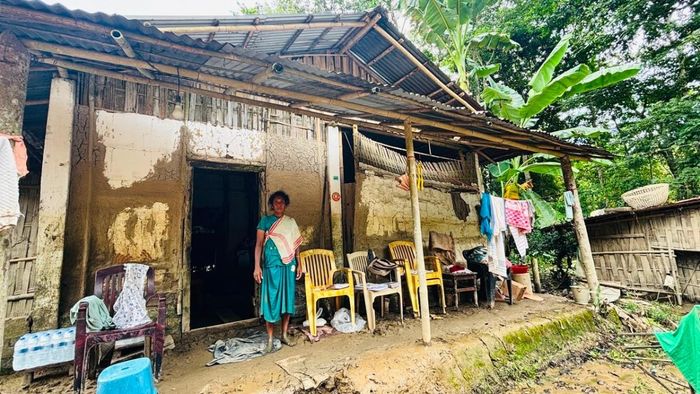
“Every moment of the floods in July is still etched in my heart. I will never be able to forget those horrifying days,” said 55-year-old Pratima Khanikar of Khanikar Gaon in Sivasagar, who experienced flooding of such intensity for the first time in life.
“When the floodwaters entered our area, our biggest worry was not just the damage around us, but also how we would manage our daily expenses. Before our eyes, we lost all our sources of livelihood,” Pratima recalled.
A family of five suffered significant livelihood losses during the floods. “Of the 15 ducks we had, we lost 12. Besides, four pigs and fish worth at least Rs 10,000 were washed away by the floodwaters,” she said.
Pratima further explained that the floods had also destroyed their four taat xaal (traditional handloom weaving units), wiping out another source of livelihood. “The floods have taken everything we had and left us struggling for even the smallest necessities,” she said.
“My main worry is how to restart our lives and livelihoods. Even after the floodwaters receded, the difficulties remained. We needed resources to rebuild what we had lost, but arranging them was not easy,” she added.
Another elderly widow, Dalimi Chetia, a resident of the Rajapaul area in Nazira, Sivasagar district, shared her ordeal.
“The floodwaters in our area began rising in the early evening. At that time, only my daughter-in-law, who was in the advanced stages of pregnancy, and I were at home,” she said.
Dalimi immediately called her elder sons and braved the knee-deep floodwaters to move her daughter-in-law to a higher, safer location where the risk of flooding was lower.
“I was worried about her safety and tried my best to get her out of the house before the situation worsened,” she stated.
It was only after ensuring her daughter-in-law's safety that Dalimi's attention turned to her livestock and she rushed her home only to find her 65 chicks, two turkeys and a piglet being swept away in the flood.
“These livestock were a vital source of income for us. I was raising them to earn money and contribute towards our household expenses. With their loss, I have lost both my animals and the income expected from them,” she said.
“Neither do I have the resources nor the mental strength to overcome this situation. I have no idea how to cope with what has happened,” she added.
Pratima and Dalimi are not the exceptions, their experiences reflect the plight of thousands of people who suffered significant losses during the Assam floods 2026.
According to official information, more than 10 lakh livestock and15,000 hectares of agricultural land have been affected by the floods
Recognising these challenges, the North-East Affected Area Development Society (NEADS), through its early recovery initiative in Sivasagar and Jorhat districts, is working to connect humanitarian assistance with livelihood restoration and long-term resilience. The initiative aims to support approximately 4,500 flood-affected households across 40 villages by addressing essential household needs while helping families recover productive assets and restart livelihood activities.
“Humanitarian assistance should not end when the floodwaters recede. Instead, it should continue with greater intensity, as for vulnerable affected families, the real challenge often begins afterwards. Agricultural land may be damaged, livestock lost, household assets destroyed and sources of income wiped out,” said Tirtha Prasad Saikia, director of NEADS, a locally rooted humanitarian and development organisation working to strengthen community resilience, promote sustainable development and address humanitarian challenges.
He further added the approach at NEADS in this regard is to bridge the gap between emergency relief and long-term recovery by helping families restore their productive assets, revive livelihoods and rebuild their economic security.
“We strongly believe that recovery must go beyond replacing what has been lost. It should create opportunities for communities to become more resilient to future climate and disaster risks,” Saikia added.
Saikia also stressed the importance of providing locally led solutions, promoting livelihood diversification and sustainable agricultural practices, and ensuring the meaningful participation of affected communities in shaping their own recovery.
“Ultimately, our goal is not simply to help families return to where they were before the floods, but to support them in rebuilding stronger, more secure and climate-resilient livelihoods,” he asserted.
To strengthen livelihood opportunities, NEADS has collaborated with government departments.
“For the past few years, we have been working collaboratively with the organisation, particularly in training farmers and spreading awareness about climate change, seeds, pesticides and related issues,” said Saurav Sarma, District Agriculture Officer, Jorhat.
He added that NEADS had once again approached the department to extend support to farmers who had suffered massive losses during the floods.
“More than 2,000 areca nut and coconut saplings have already been distributed among flood-affected farmers. In the coming months, saplings and planting materials for other crops, such as mustard and potato, will also be provided,” he informed.
It is worth mentioning that for over a decade, NEADS has been addressing various challenges through its climate-resilient livelihood initiatives. The organisation has encouraged activities such as poultry rearing, piggery and homestead vegetable gardening, helping rural households explore multiple sources of income.
Alongside livelihood support, several initiatives have been undertaken to provide training, veterinary assistance and facilitate access to relevant government entitlements, enabling families to strengthen their productive capacities.
“For vulnerable households, diversification can offer an important safety net, as dependence on a single livelihood source leaves families exposed to substantial losses. Combining livestock rearing with vegetable cultivation and other income-generating activities can potentially reduce vulnerability. However, the effectiveness of such diversification depends entirely on whether livelihood assets can withstand recurring climate-related disruptions,” Saikia concluded.
MORE NEWS
Read more!