Assam: Hunger strikers’ removal triggers major road blockade in West Karbi Anglong's Kheroni Bridge
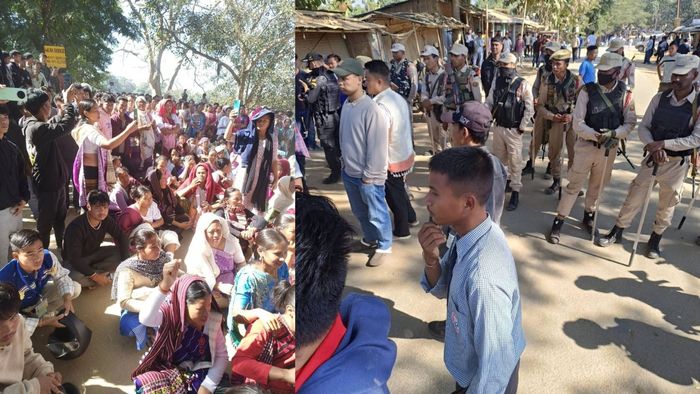
Tensions escalated sharply in West Karbi Anglong district on December 22 after authorities removed indigenous hunger strikers in the early hours, triggering a massive road blockade at Kheroni Bridge, also known as Thong Nokbe.
- Dec 22, 2025,
- Updated Dec 22, 2025, 1:08 PM IST
Tensions escalated sharply in West Karbi Anglong district on December 22 after authorities removed indigenous hunger strikers in the early hours, triggering a massive road blockade at Kheroni Bridge, also known as Thong Nokbe.
The blockade began around dawn after protesters who had been on a hunger strike for 15 days at Phelangpi (Felangpi) were reportedly cleared from the site at about 3 am.
The move prompted thousands of Karbi people and members of other indigenous communities to pour onto the bridge, sitting across the road and chanting slogans demanding action against alleged illegal settlements on protected land.
Women, elders, students and youths from nearby villages joined the protest, bringing traffic to a standstill on a key route connecting parts of the district. The demonstration grew steadily through the day, underscoring widespread local anger over what protesters describe as unchecked encroachment on reserved grazing areas.
Security was tightened with the deployment of around 1,000 police personnel, creating a heavy presence in and around the bridge. Despite this, the protest remained largely peaceful, with no reports of violence as crowds continued to swell.
An Executive Magistrate from the district administration visited the site to hold talks, but demonstrators rejected the offer and demanded direct dialogue with Karbi Anglong Autonomous Council leadership. Protesters specifically called for the presence of Tuliram Ronghang, saying only top-level assurances would be acceptable.
Authorities said the situation remains fluid and under close watch, with no immediate breakthrough. The blockade forms part of a longer-running movement in the district, where indigenous groups have repeatedly warned that continued encroachment on protected and grazing lands threatens their livelihoods and customary rights.