Assam recorded strong economic and social progress over past decade: Himanta Biswa Sarma
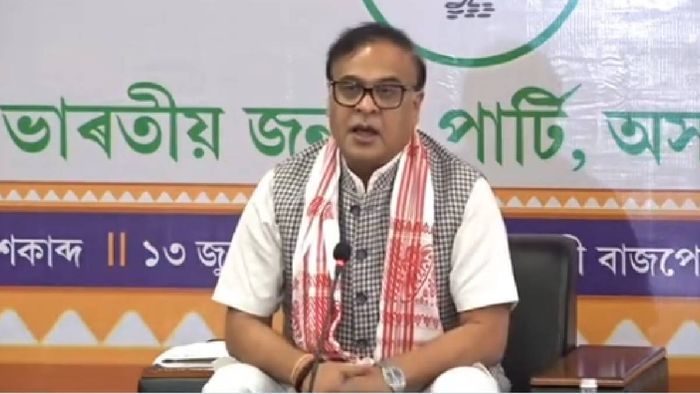
Marking 12 years of Prime Minister Narendra Modi’s tenure, a special media conclave was organised at Atal Bihari Vajpayee Bhawan in Guwahati on Saturday, June 13, where Assam Chief Minister Himanta Biswa Sarma presented an overview of the state’s developmental progress and socio-economic transformation over the past decade.
- Jun 13, 2026,
- Updated Jun 13, 2026, 8:48 PM IST
Marking 12 years of Prime Minister Narendra Modi’s tenure, a special media conclave was organised at Atal Bihari Vajpayee Bhawan in Guwahati on Saturday, June 13, where Assam Chief Minister Himanta Biswa Sarma presented an overview of the state’s developmental progress and socio-economic transformation over the past decade.
The conclave, themed “12 Years of Trust, Development and Public Welfare,” brought together editors from 25 selected media organisations across Assam. BJP state president Dilip Saikia was also present at the event.
Addressing the gathering, Sarma highlighted Prime Minister Narendra Modi’s sustained engagement with Assam and the Northeast, stating that the Prime Minister has visited the state 36 times over the last 12 years — a frequency he described as unprecedented for any Indian Prime Minister.
The Chief Minister noted that even before assuming office, Modi had travelled extensively across Assam’s districts and developed an in-depth understanding of the state’s social and developmental challenges.
Reflecting on his political experience, Sarma said he had not witnessed any Prime Minister demonstrating such detailed knowledge and continued interest in Assam’s development trajectory.
Highlighting the state’s economic progress, Sarma said Assam received financial assistance amounting to Rs 1.7 lakh crore from the Centre between 2006 and 2026, while central support during the period from 2016 to 2026 alone totalled Rs 5.5 lakh crore.
On social indicators, the Chief Minister stated that nearly 80 lakh people in Assam had moved out of poverty during 2022–23. He also pointed to improvements in public health outcomes, saying maternal mortality had reduced significantly from 480 maternal deaths per lakh births during his tenure as Health Minister to 84 at present.
Sarma further asserted that Assam’s economic growth had exceeded the national average, claiming that the state recorded a 45 per cent growth rate between 2020 and 2025 compared to the country’s 29 per cent.
Emphasising infrastructure expansion and regional connectivity, the Chief Minister outlined several ongoing and upcoming projects. He said travel time between Silchar and Srirampur is expected to reduce to seven hours, while work on the Siliguri–Silchar corridor is progressing. He also announced that construction of a four-lane road from Baihata Chariali to Mission Chariali would begin shortly.
Additionally, Sarma announced plans for a new national highway connecting Nagaon and Morigaon to Bhutan through Jagiroad and Udalguri, accompanied by bridge infrastructure aimed at strengthening regional connectivity.
On cultural outreach, the Chief Minister said traditional Assamese cultural expressions including Bihu, Bagurumba and Jhumur had gained wider national and international recognition with support from the Prime Minister. He also noted that Assam has frequently featured in the Prime Minister’s radio programme Mann Ki Baat.
Addressing border management, Sarma said fencing work along the India–Bangladesh border had progressed unevenly across states over the decades. He noted that while Assam had existing stretches of fencing, major sections in neighbouring states remained open for years. He stated that implementation efforts linked to commitments following the Assam Accord had gained renewed momentum in recent years, with fencing projects now underway across multiple northeastern states.
The Chief Minister described border management as a national priority and reiterated the government’s commitment to protecting the interests and citizenship rights of Indian citizens.
Sarma also highlighted the growing penetration of internet access in Assam, particularly among women, describing it as an indicator of increasing digital inclusion and empowerment.
Commenting on interstate comparisons, the Chief Minister said Assam’s development should be assessed within its own economic context rather than directly compared with more industrially advanced states, while maintaining that the state continues to move steadily on its own growth trajectory.