Assam: Seven years on, Dhubri's Tipkai bridge remains incomplete, residents warn of poll boycott
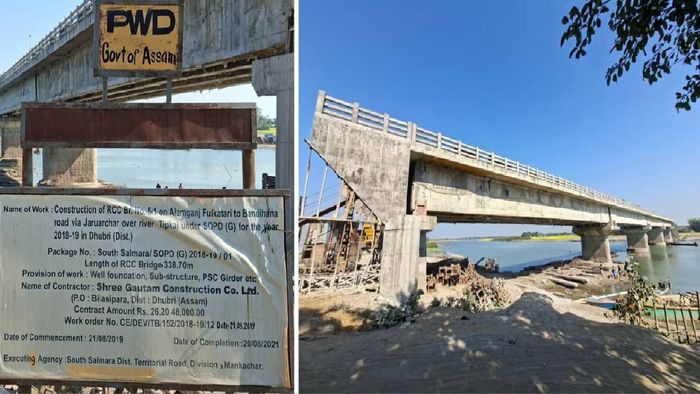
As Assam inches closer to the 2026 Assembly elections, simmering public anger over a stalled Rs 26.20-crore bridge project across the Tipkai River is fast turning into a political flashpoint in Dhubri district. For nearly 1.5 lakh residents of Bandihana and Jarua, the unfinished bridge is no longer just a delayed infrastructure project, it has become a symbol of administrative apathy, alleged political patronage, and stalled development.
- Feb 12, 2026,
- Updated Feb 12, 2026, 4:06 PM IST
As Assam inches closer to the 2026 Assembly elections, simmering public anger over a stalled Rs 26.20-crore bridge project across the Tipkai River is fast turning into a political flashpoint in Dhubri district. For nearly 1.5 lakh residents of Bandihana and Jarua, the unfinished bridge is no longer just a delayed infrastructure project, it has become a symbol of administrative apathy, alleged political patronage, and stalled development.
Sanctioned during the 2018–19 financial year under the SOPD(G) fund, the bridge was envisioned as a critical lifeline connecting Alamganj Fulkatari and Bandihana road via Jaruarchar. Construction began in 2019 under Shree Gautam Construction Co. Ltd., with an allocated budget of approximately Rs 26.20 crore. The project was slated for completion in 2021.
Seven years later, the nearly 500-metre-long structure stands incomplete, with local reports suggesting that less than 60 per cent of the work has been executed. Residents allege that on most days, only a handful of labourers are seen at the site, fuelling frustration over what they describe as an “unacceptable and deliberate delay.”
The contractor firm executing the project is reportedly linked to BJP leader Ashok Singhi, a claim that has intensified local scrutiny. Residents are questioning why, despite repeated deadline extensions and slow progress, stringent action has not been taken against the contractor.
Adding to the controversy are allegations from residents that vested interests may be intentionally stalling the bridge’s completion. Locals claim that a so-called “ghat mafia” benefiting from ferry operations across the Tipkai has an economic incentive to delay the project.
There are further allegations that certain officials associated with the now-restructured Inland Water Transport (IWT) Department may be complicit in protecting ferry-based revenue streams by allowing the bridge project to languish. While these claims remain unproven, they have deepened public mistrust and intensified calls for a high-level inquiry.
The political ramifications are particularly significant in the newly formed 9-Birsing Jarua Legislative Assembly Constituency, previously part of South Salmara. With the 2026 elections approaching, residents are openly voicing dissatisfaction with both ruling and opposition leaders.
Sitting MLA Wazed Ali Chowdhury is facing criticism for what locals perceive as silence and inadequate pressure on the government to expedite the project. Similarly, Member of Parliament Rakibul Hussain has been accused by sections of the electorate of failing to escalate the matter effectively at higher forums despite its regional importance.
Residents of Bandihana and Jarua continue to depend on small boats to cross the Tipkai River. Schoolchildren face daily risks travelling across the river, particularly during monsoon months. Emergency medical transport remains severely compromised, especially at night, with locals recounting instances where delayed river crossings have led to tragic outcomes.
Farmers and small traders are forced to incur high ferry costs to transport agricultural produce and goods, hampering economic growth in an already vulnerable region.
“We are tired of empty promises. School children, the elderly, and the sick risk their lives on small boats every day while this bridge remains half-built,” said a resident of Bandihana.
Public anger is now crystallizing into a political warning. Residents have begun rallying under the slogan “No Bridge, No Vote,” threatening to boycott the 2026 Assembly elections unless visible and time-bound progress is made.
With elections looming, the stalled bridge may well become one of the defining issues shaping voter sentiment in the region.