Assam to rewrite history textbooks, Himanta questions Bagh Hazarika’s role at Battle of Saraighat
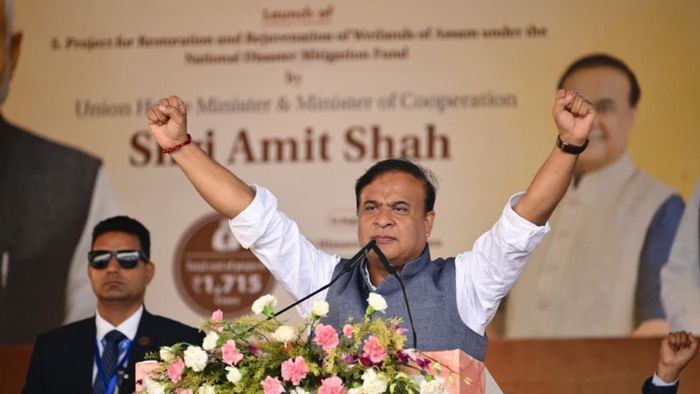
Assam Chief Minister Himanta Biswa Sarma on January 30 announced that the state government has decided to rewrite history textbooks at the high school level, directing the Education Department to initiate the process.
- Jan 30, 2026,
- Updated Jan 30, 2026, 9:33 PM IST
Assam Chief Minister Himanta Biswa Sarma on January 30 announced that the state government has decided to rewrite history textbooks at the high school level, directing the Education Department to initiate the process.
The chief minister, however, did not spell out the full scope of the changes proposed but raised questions over historical narratives currently taught in schools.
Addressing the closing ceremony of the 10th Mising Youth Festival organised by Takam Mising Porin Kebang (All Mising Students’ Union) at Kareng Chapori, Sarma questioned the depiction of Ahom warrior Bagh Hazarika in history textbooks. He claimed that Bagh Hazarika did not fight alongside Ahom general Lachit Barphukan against the Mughals in the Battle of Saraighat.
“There was no Bagh Hazarika with Lachit Barphukan in the Battle of Saraighat. It was Mising leader Miri Handique who fought against the Mughals in Kamrup,” the chief minister said, making the remarks in the presence of Union Home Minister Amit Shah.
Ismail Siddique, popularly known as Bagh Hazarika, is described in historical accounts as a 17th-century Ahom warrior who fought alongside Lachit Borphukan during the 1671 Battle of Saraighat. He is believed to have been born into an Assamese Muslim family in Dhekerigaon village near Garhgaon in present-day Sivasagar district.
Sarma said he had already conveyed the decision to rewrite the history textbooks to Assam Education Minister Ranoj Pegu. “We have decided to rewrite history for high schools, and I have informed the education minister,” he said.
The chief minister also spoke at length on the issue of infiltration, crediting the Mising community for safeguarding Upper Assam from land encroachments. He claimed that areas with a strong Mising presence had remained largely unaffected by illegal settlement.
“Had the Mising people lived from Dhubri to Sadiya, not a single Miya could have entered Assam. From Golaghat onwards, there is no Miya,” Sarma said.
The term ‘Miya’ is commonly used in Assam to refer to Bengali-speaking Muslims and is often associated with allegations of illegal immigration from Bangladesh, though members of the community in recent years have reclaimed the term as a form of assertion.
Praising the community, Sarma said the Mising people are hardworking and self-reliant and have played a significant role in protecting Assamese culture and identity. “If there were Mising people in every district, not a single Miya could have taken our land,” he added.
At the event, the chief minister also announced a grant of ₹100 crore for the Mising Youth Festival and an additional ₹10 crore for the upliftment of the Donyi-Polo society, underscoring the government’s commitment to the cultural and social development of indigenous communities in the state.