Assam train derailment: Railway board orders mandatory braking tests after handover
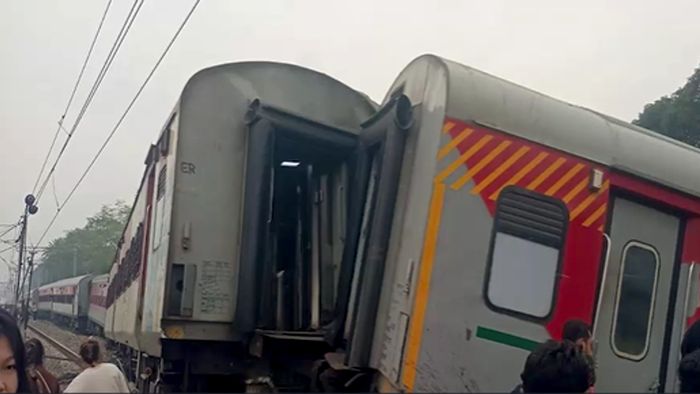
The Railway Board has directed all railway zones to ensure that running crews conduct mandatory braking tests after taking charge of trains, following the derailment of the Kolkata-Sairang Express near Guwahati on November 11.
- Nov 14, 2026,
- Updated Nov 14, 2026, 7:46 AM IST
The Railway Board has directed all railway zones to ensure that running crews conduct mandatory braking tests after taking charge of trains, following the derailment of the Kolkata-Sairang Express near Guwahati on November 11.
In a directive dated November 11, the Board also ordered all zonal railways to conduct a safety drive from November 12 to 18 to check whether locomotive crews are carrying out brake feel and brake power tests as prescribed. Any discrepancies must be compiled and reported to the Railway Board by November 20.
A preliminary probe into the derailment at Assam’s Digaru railway station has pointed to a malfunction in the train’s main braking system. The six-member inquiry team found that the BP angle cock, a component responsible for applying brakes in the coaches, was in an isolated condition in the locomotive.
The preliminary report, however, does not establish who rendered the braking system dysfunctional or whether the crew failed to follow mandatory safety procedures before operating the train.
Railway officials said the Board’s directive reiterates existing safety norms, compliance with which was allegedly overlooked in the Kolkata-Sairang Express incident.
Under the brake feel test, the locomotive pilot first brings the train to around 15 kmph before applying the brakes through the main braking system, known as A-9. The speed should reduce to around 10 kmph, allowing the crew to assess whether the brakes are functioning effectively.
For the brake power test, the crew accelerates a passenger train to 60-70 kmph and then applies the brakes to bring its speed down to 30-35 kmph. In the case of goods trains, the corresponding speeds are 40-50 kmph and 20-25 kmph, respectively.
The Railway Board has also underlined the responsibility of the assistant loco pilot (ALP), who must ensure that both tests are conducted and remind the loco pilot if required. The ALP is also expected to independently observe the effectiveness of the braking system during the tests.
According to railway sources, a possible communication lapse during the locomotive handover at Guwahati may have led to the BP angle cock being isolated.
The Kolkata-Sairang Express earlier underwent a routine locomotive change at Guwahati, where its electric locomotive was replaced with a diesel one. During this process, station staff would isolate the BP angle cock.
However, following the completion of electrification on the route, the locomotive change was discontinued over the last few days, and the electric locomotive began operating the train beyond Guwahati.
An official said the staff member responsible for isolating the angle cock was on leave when the locomotive interchange practice was discontinued. When he returned to duty on November 11, he reportedly followed the earlier routine and isolated the angle cock, apparently unaware that the electric locomotive would continue the journey.
The official further said the train crew may have either failed to conduct the mandatory braking tests or relied on regenerative braking along with the main A-9 braking system while checking the train’s braking capability.
The crew may have discovered that the main braking system was not functioning when they attempted to stop the train near the loop line, potentially contributing to the derailment, the official added.
The circumstances surrounding the incident and the possible lapses are being examined.