Assam woman entrepreneur champions northeast India's blue-collar workforce at Davos
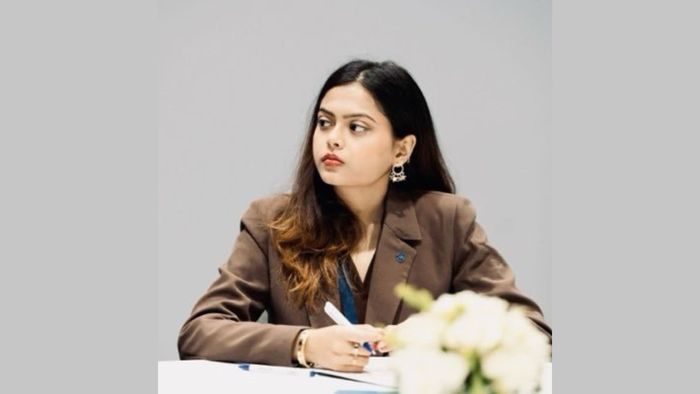
While global business and political leaders gather in the snow-covered Swiss town of Davos, Drishti Medhi, an entrepreneur from Assam, is ensuring that India's blue-collar workers and indigenous communities from the northeast are not left out of the conversation.
- Jan 20, 2026,
- Updated Jan 20, 2026, 11:12 AM IST
While global business and political leaders gather in the snow-covered Swiss town of Davos, Drishti Medhi, an entrepreneur from Assam, is ensuring that India's blue-collar workers and indigenous communities from the northeast are not left out of the conversation.
Medhi, co-founder of QuickGhy, has travelled to the World Economic Forum's Annual Meeting 2026 with a clear mission: to build market access for India's blue-collar sector whilst representing the often-overlooked indigenous communities of northeast India in discussions around trade and economic development.
QuickGhy focuses on upskilling, training and empowering blue-collar workers, providing them with the tools needed to access better market opportunities. Medhi's work on technology development aligns with her broader objective of positioning India as a growing innovation hub whilst amplifying the voices of grassroots communities from the northeast.
Also attending from India is Ishan Pratap Singh, 22, a civic entrepreneur from New Delhi who founded Cooperation17, a global social startup. Singh, selected as one of 40 participants worldwide to attend the WEF meeting as a Global Shaper, works on solving civic dysfunction through partnerships between citizens, institutions, businesses and governments.
His organisation builds cooperation around the 17 UN Sustainable Development Goals through civic engagement and direct implementation in urban and rural communities around Delhi. At Davos, Singh aims to showcase India's sustained development story and form partnerships focused on dialogue, frontier technology and grassroots implementation of development goals.
The presence of both entrepreneurs comes as Assam chief minister Himanta Biswa Sarma told the WEF on 19 January that the state must be viewed as integral to the northeast's collective economic future. He said any growth in Assam automatically benefits the entire region due to deep connections in geography, talent and infrastructure.
Sarma said Assam is witnessing growing interest in the semiconductor sector following Tata's proposed project, with a meeting scheduled with industry leaders. He confirmed that whilst no specific proposal is currently on the table, interactions with key stakeholders are expected to accelerate development.
The chief minister said MoUs worth around Rs 5 lakh crore were signed at last year's Advantage Assam 2.0 summit, with investments of nearly Rs 3 lakh crore already underway. He added that Assam expects to sign MoUs worth nearly Rs 1 lakh crore during the Davos visit, primarily in green energy sectors, including pumped storage projects and bamboo-to-methanol conversion.
Sarma described Assam's participation at Davos as a milestone, noting it is the first time the state is formally presenting itself at the forum. He cited Reserve Bank of India data showing Assam as the country's fastest-growing state, reinforcing its appeal to investors.