Bamboo to Biofuel: How Assam is powering India’s green energy future
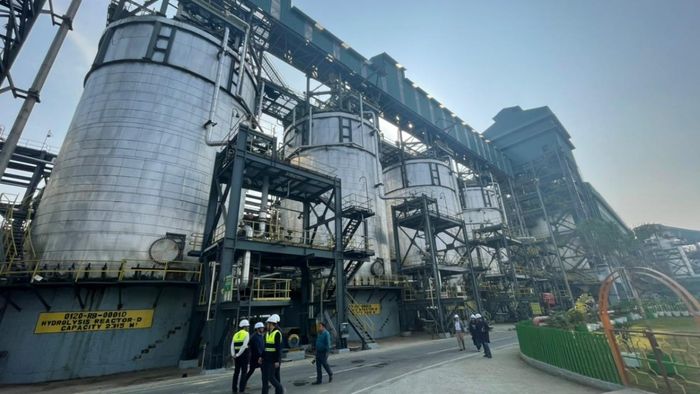
In a quiet industrial stretch of Upper Assam, a green revolution is taking shape. At Numaligarh, Assam Bio Ethanol Private Limited (ABEPL) has established the world’s first commercial-scale second-generation (2G) bio-ethanol plant using bamboo as feedstock, a milestone that places the Northeast at the centre of India’s clean energy transformation.
Achintya Patangia
- Feb 14, 2026,
- Updated Feb 14, 2026, 3:10 PM IST
In a quiet industrial stretch of Upper Assam, a green revolution is taking shape. At Numaligarh, Assam Bio Ethanol Private Limited (ABEPL) has established the world’s first commercial-scale second-generation (2G) bio-ethanol plant using bamboo as feedstock, a milestone that places the Northeast at the centre of India’s clean energy transformation.
Developed as a joint venture led by Numaligarh Refinery Limited (NRL), with technology support from Finland-based Chempolis Oy and renewable energy expertise from Fortum, the Rs 4,930-crore project represents more than just an industrial investment. Spread across 43 acres, it signals a shift in how India views bamboo, not merely as a forest resource, but as a high-value industrial raw material.
A global first
Unlike first-generation ethanol, which relies on food crops such as sugarcane or maize, second-generation ethanol is produced from non-food biomass. At Numaligarh, that biomass is bamboo, abundant across Assam and the wider Northeast.
The plant produces 49,000 metric tonnes of ethanol annually, requiring nearly five lakh metric tonnes of green bamboo each year. The raw material is sourced from within a 250–300 km radius, covering 26 districts across Assam, Arunachal Pradesh, Nagaland and Meghalaya.
Through advanced biorefining technology, cellulose and hemicellulose from bamboo are converted into ethanol. Valuable co-products such as furfural, acetic acid and liquid CO₂ are also generated. Even lignin, a by-product, is used for bio-coal and captive power generation of up to 25 MW. The result: near-zero waste and high energy efficiency.
A rural economic engine
The impact of the project extends far beyond fuel production.
More than 4,200 farmers have already been registered under the bamboo sourcing programme, and the target is to expand to over 30,000 cultivators. So far, one lakh bamboo saplings have been distributed free of cost, with a long-term goal of distributing 60 lakh saplings.
If bamboo cultivation begins today, harvesting becomes possible in about four years. Over the next three years, ABEPL plans to bring 12,500 hectares under bamboo cultivation.
Tea gardens, which are permitted to use up to 5% of their land for non-tea purposes, are now increasingly using this portion for bamboo cultivation under the initiative. Bamboo can also grow on fallow and barren land, turning previously underutilised spaces into productive assets.
Farmers will be paid per tonne of bamboo supplied, with prices linked to local market rates. As demand rises, prices are expected to increase, directly benefiting cultivators.
Policy shift that changed everything
For decades, bamboo was legally classified as a tree, which meant strict forest regulations governed its harvesting and transport. Following policy reforms initiated under Prime Minister Narendra Modi, bamboo was reclassified as a grass. This removed major regulatory barriers, enabling free cultivation, harvesting and trade.
The reclassification proved to be a turning point for the bamboo economy in the Northeast. It unlocked commercial potential and paved the way for industrial-scale projects like ABEPL to integrate farmers directly into the biofuel value chain.
A regional supply network
The sourcing strategy reflects a strong regional footprint.
In Assam, bamboo is procured from 16 districts, including Biswanath, Dibrugarh, Golaghat, Jorhat, Nagaon, Sonitpur, Tinsukia and Karbi Anglong. Arunachal Pradesh contributes from East Siang, Lower Dibang Valley, Papum Pare and West Kameng. Nagaland supplies from Mokokchung, Wokha, Dimapur, Peren and Niuland, while Meghalaya contributes from Ri Bhoi.
To support this network, ABEPL has rolled out its Lignocellulosic Logistics & Enablement System (LLES), decentralised chipping units located across Assam and neighbouring states. These units reduce transportation costs, create local jobs and strengthen grassroots supply chains.
Energy security meets sustainability
The plant contributes to India’s ethanol blending programme under the Pradhan Mantri JI-VAN Yojana, aimed at reducing crude oil imports and cutting carbon emissions.
Second-generation ethanol offers significant emission reductions compared to fossil fuels, without triggering the food-versus-fuel debate. By using non-food biomass and promoting sustainable harvesting, the project balances economic growth with environmental responsibility.
When the plant was dedicated to the nation in September 2025, it marked more than the inauguration of a factory. It represented a new development model, one that combines clean energy, rural income generation and industrial innovation.
From forest to fuel tank, Numaligarh is now firmly on the global map. And in doing so, Assam is showing how local resources can power a greener future for India, and perhaps the world.
MORE NEWS
Read more!