Congress first sought UCC in 1925; it represents only one community now: Himanta tells Assam Assembly
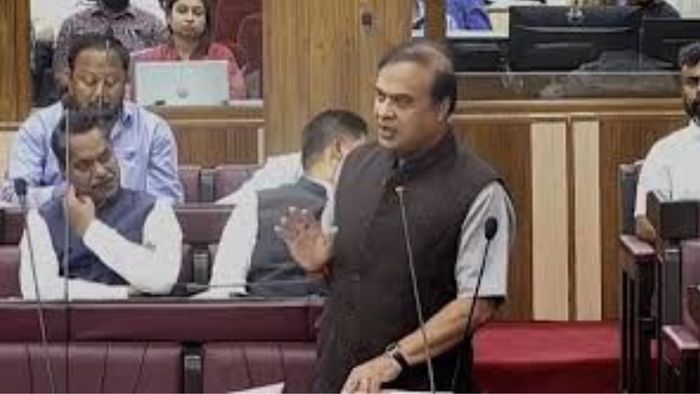
Assam Chief Minister Himanta Biswa Sarma on May 27 defended the proposed Uniform Civil Code (UCC) legislation in the Assam Assembly, claiming that the Congress was the first political party to advocate for a Uniform Civil Code nearly a century ago and alleging that the opposition party has moved away from secular values.
- May 27, 2026,
- Updated May 27, 2026, 3:19 PM IST
Assam Chief Minister Himanta Biswa Sarma on May 27 defended the proposed Uniform Civil Code (UCC) legislation in the Assam Assembly, claiming that the Congress was the first political party to advocate for a Uniform Civil Code nearly a century ago and alleging that the opposition party has moved away from secular values.
Replying to questions during a discussion on The Uniform Civil Code, Assam, 2026 Bill, Sarma said the legislation is rooted in Article 44 of the Indian Constitution and not based on any BJP or RSS ideology, as alleged by opposition members.
“The UCC has a long history. It was first demanded by the Congress in 1925. It was also suggested in 1937 by Jawaharlal Nehru. That same Congress is opposing it from the Quran and Shariat angle, not from the Hindu, Christian or tribal angle,” Sarma said in the Assembly.
The Chief Minister also criticised the composition of the Congress legislative party in Assam, alleging that it does not represent the state’s broader social diversity.
“The Congress is opposing the UCC. Their Assembly composition proves that they are not representing all castes, creeds and religions, but only one specific community,” he said.
Expressing concern over the party’s political direction, Sarma said Congress should continue following India’s secular traditions instead of becoming a “communal party”.
Referring to Goa, the Chief Minister said the coastal state became the country’s first region with a common civil code after retaining the Portuguese Civil Code following its merger with India in 1961.
He further said Assam would become the third state in India to implement a Uniform Civil Code after Uttarakhand and Gujarat, describing it as an important step towards gender justice.
“Article 44 of the Indian Constitution is the foundation of this Bill,” Sarma said.
Defending the decision to keep Scheduled Tribes outside the ambit of the proposed law, Sarma said tribal communities already follow customary practices governing personal matters.
“Tribals don't support polygamy, provide equal rights to girls and don't recognise live-in relationships. In many ways, they have followed principles similar to UCC for generations,” he said.
The Assam government had earlier tabled The Uniform Civil Code, Assam, 2026 Bill, aiming to establish a common legal framework governing marriage, divorce, succession and live-in relationships irrespective of religion. The Bill proposes banning polygamy, making registration of live-in relationships mandatory and includes penal provisions for violations.
However, the proposed legislation excludes Scheduled Tribes residing in Assam from its applicability.