Debabrata Saikia seeks moratorium on new large data centres in Assam, flags threat to tea and water resources
Congress leader Debabrata Saikia has urged Assam Chief Minister Himanta Biswa Sarma to impose a temporary moratorium on new large-scale data-centre and artificial intelligence (AI) computing projects in the state, calling for a comprehensive assessment of their potential impact on water resources, power supply, local temperatures, tea cultivation and agrarian livelihoods.
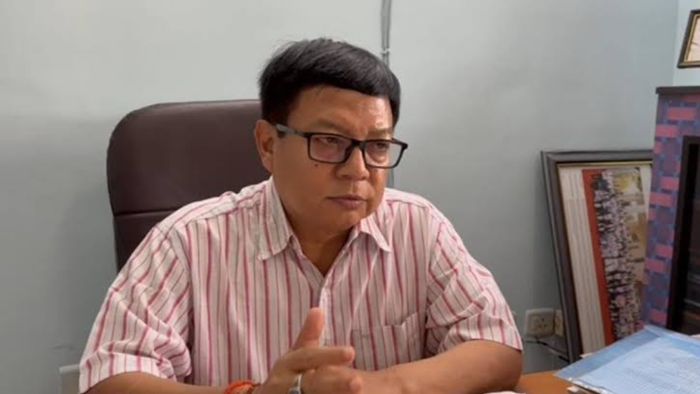
- Sep 05, 2026,
- Updated Sep 05, 2026, 8:09 PM IST
Congress leader Debabrata Saikia has urged Assam Chief Minister Himanta Biswa Sarma to impose a temporary moratorium on new large-scale data-centre and artificial intelligence (AI) computing projects in the state, calling for a comprehensive assessment of their potential impact on water resources, power supply, local temperatures, tea cultivation and agrarian livelihoods.
In an eight-page representation to the Chief Minister, Saikia said Assam should welcome technological investment but argued that the state must first establish a scientifically grounded regulatory framework for resource-intensive digital infrastructure.
Saikia said his intervention was not against digital technology or industrial investment, but was aimed at ensuring that large data centres are not allowed to expand without assessing their cumulative environmental and resource footprint.
His demand comes after the commissioning of the National Data Centre–North East Region at Amingaon in February 2026. According to Saikia, the facility has been designed for a total power capacity of around 8 MW and involves power-intensive computing, liquid cooling, backup generation and dedicated water-treatment systems.
He said further proposals for hyperscale AI computing facilities in Assam made it necessary for the government to apply the “Precautionary Principle” before allowing the state to develop into an energy- and water-intensive data-centre hub.
‘Technology should not come at the cost of tea’
Saikia said Assam’s tea industry, which has been central to the state’s economy and rural social structure for nearly two centuries, must be protected while planning new industrial infrastructure.
Citing Tea Board of India figures, he said 1,25,484 small tea growers had been enumerated in Assam as of March 2023, cultivating more than 1.17 lakh hectares.
He also pointed to Assam’s dominant position in national tea production, saying the state produced an estimated 55.41 million kg of tea in April 2026, more than half of India’s total production of 104.28 million kg during the month.
Saikia argued that climate stress was already affecting tea-growing regions and claimed that further localised warming from large computing facilities could aggravate the vulnerability of tea plantations and other crops.
He cited a 2026 peer-reviewed climatological analysis of Assam’s South Bank tea belt, which, he said, found that mean maximum temperatures had increased by 1.1 to 1.3 degrees Celsius above historical baselines.
He further cited research indicating that tea productivity declines when average monthly temperatures cross critical thresholds and said rising temperatures, erratic rainfall and drought spells could also affect the biochemical characteristics and quality of Assam tea.
Water use, heat and power concerns
Saikia raised concerns over the amount of water required to cool large data centres, saying their impact should not be assessed merely on the basis of the physical size of the facility.
He demanded mandatory disclosure of the source of cooling water, annual and peak-season withdrawals, net evaporative consumption, impacts on nearby agricultural wells and village tubewells, wastewater characteristics and the vulnerability of facilities to floods and siltation.
He also cited international research to argue that water consumption can vary significantly depending on cooling technology, weather conditions and the source of electricity used by data centres.
Another concern raised by Saikia was waste heat generated by computing infrastructure. He said data-processing equipment converts almost all electricity consumed into heat, which cooling systems ultimately transfer into the surrounding environment.
Citing research highlighted by the Yale School of the Environment, he claimed that large computing facilities could create measurable local temperature increases and thermal disturbances extending beyond their immediate premises.
Saikia urged the government to assess how such thermal effects could interact with Assam’s humid climate and sensitive tea-growing and agricultural areas.
He also warned that the ecological footprint of hyperscale facilities could extend beyond the data-centre campus through additional transmission lines, substations, backup power infrastructure and associated land requirements.
Twelve-point regulatory framework proposed
Saikia proposed a 12-point regulatory framework, beginning with an immediate administrative pause on sanctioning, land allotment and environmental clearances for new large-scale commercial, hyperscale and AI-focused data centres until Assam adopts a dedicated environmental and resource sustainability policy.
He called for an independent cumulative-impact assessment involving institutions including IIT Guwahati, CSIR-NEIST, Assam Agricultural University, Tocklai Tea Research Institute and the Assam State Pollution Control Board.
Among his other demands are mandatory tea and agricultural livelihood impact assessments, scientifically determined buffer zones around tea landscapes and wetlands, restrictions on the use of potable water and unrestricted groundwater for industrial cooling, and stringent hydrogeological clearances.
He also proposed mandatory public disclosure of data-centre power and water efficiency, renewable-energy sourcing, diesel emissions and cooling-related discharge.
Saikia called for hyperscale facilities to source their operational electricity from newly commissioned dedicated renewable-energy projects and sought mandatory thermal-plume modelling and waste-heat mitigation.
He further proposed special environmental safeguards for major tea-producing districts, economic protection for small tea growers and a dedicated climate-resilience programme for Assam’s tea sector.
Questions investment model
Saikia also questioned whether headline investment figures alone should determine the desirability of large data-centre projects.
He urged the government to assess permanent local employment generated against public subsidies, water and electricity consumption, tax concessions, grid-upgradation costs and potential disruption to existing agricultural livelihoods.
“If a highly automated hyper-scale computing centre generates very few permanent jobs for local youth while consuming millions of litres of water, absorbing vast amounts of grid power, and aggravating ecological stress on an indigenous tea sector that employs lakhs of Assamese citizens, the tradeoff is deeply inequitable,” Saikia said in his representation.
He said Assam should pursue “technology alongside tea, not technology at the cost of tea”.
Calling for urgent action, Saikia urged the state government to institute a temporary moratorium, commission an expert review and formulate a statutory policy framework before allowing further expansion of large-scale data-centre infrastructure.
He argued that such regulation would not make Assam “anti-investment”, but would ensure that technological and industrial growth takes place without compromising the state’s water resources, environment, agricultural economy and livelihoods.