Delimitation key to NDA’s 102-seat sweep in Assam; minority influence reduced in key constituencies
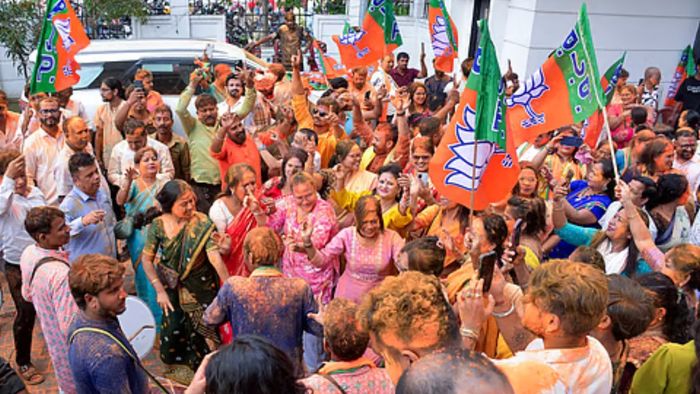
The 2023 delimitation exercise has emerged as a major factor behind the BJP-led NDA’s sweeping victory in Assam, where the alliance secured a record 102 seats in the 126-member Assembly.
- May 05, 2026,
- Updated May 05, 2026, 11:27 AM IST
The 2023 delimitation exercise has emerged as a major factor behind the BJP-led NDA’s sweeping victory in Assam, where the alliance secured a record 102 seats in the 126-member Assembly.
The redrawing of constituency boundaries altered the electoral landscape significantly, particularly by reshaping several Muslim-majority seats and reserving some for Scheduled Castes and Scheduled Tribes.
This realignment diluted the influence of minority vote banks that had traditionally played a decisive role in nearly 35 constituencies, reducing their impact to fewer than 25 seats.
According to election data, most of the 24 seats won by the opposition—including 19 by the Congress and two each by the AIUDF and Raijor Dal—came from constituencies largely unaffected by delimitation. A majority of these victories were by Muslim candidates, highlighting a concentration of opposition strength in limited pockets.
The delimitation exercise retained the total number of Assembly seats at 126 but increased Scheduled Tribe seats from 16 to 19 and Scheduled Caste seats from eight to nine. Constituencies like Barpeta and Goalpara West, which had significant Bengali-speaking Muslim populations, were converted into reserved seats—both of which were won by the NDA.
The impact was particularly visible in the Bodoland region, where reserved seats increased from 11 to 15. NDA ally Bodoland People’s Front (BPF) won 10 of these seats, consolidating the alliance’s position in tribal belts.
Both the Congress and the All India United Democratic Front (AIUDF) saw a sharp decline in their traditional strongholds. The AIUDF, which had won 16 seats in the previous election, was reduced to just two this time.
Despite attempts to expand its base in minority-dominated areas, including fielding candidates through ally AGP, the NDA failed to secure wins in those constituencies. The BJP itself did not field Muslim candidates, maintaining its focus on identity-driven electoral strategy.
Chief Minister Himanta Biswa Sarma had earlier indicated that delimitation would improve the BJP’s electoral prospects by creating new political dynamics. The 2026 Assembly election was the first state poll conducted after the 2023 delimitation, which was based on the 2011 Census.
In terms of final results, the BJP won 82 seats, while its allies—BPF and AGP—secured 10 seats each. The Congress managed 19 seats, while the Raijor Dal and AIUDF won two seats each, and the Trinamool Congress secured one.
Political analysts suggest that unless opposition parties reconfigure their social coalition and narrative, the NDA’s dominance in Assam is likely to persist in the near future.
(Inputs from PTI)