From forest fringe to fortune: Vanilla farming opens new income avenue for Assam villages
A quiet agricultural transformation is taking root in Assam's forest-fringe villages, where vanilla cultivation is emerging as a lucrative livelihood option while reducing dependence on forest resources.
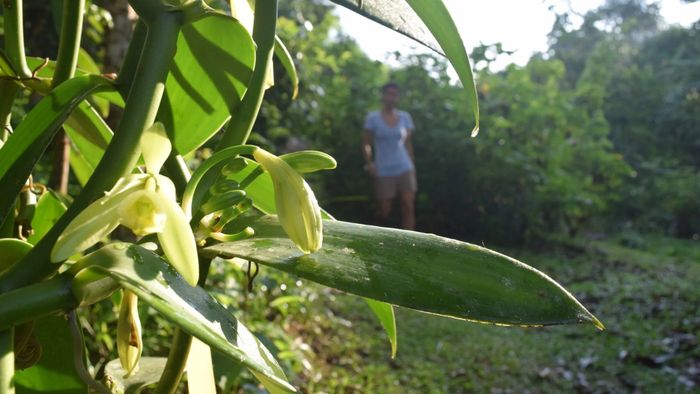
- Jul 14, 2026,
- Updated Jul 14, 2026, 12:07 PM IST
A quiet agricultural transformation is taking root in Assam's forest-fringe villages, where vanilla cultivation is emerging as a lucrative livelihood option while reducing dependence on forest resources.
Known as one of the world's most expensive spices, Vanilla (Vanilla planifolia) is fast gaining recognition as a high-value cash crop capable of generating substantial income through sustainable agroforestry practices without requiring large tracts of land.
With favourable agro-climatic conditions, Assam has already witnessed successful vanilla cultivation in districts such as Goalpara, Baksa, Chirang and Sivasagar. Encouraged by these results, the Assam Forest Department has now begun promoting commercial vanilla farming among forest-dependent communities as part of its livelihood diversification and conservation strategy.
According to the Office of the Silviculturist, Assam, under the Research and Education Circle, Basistha, around 400 vanilla vines cultivated on one bigha of land can produce nearly 1,200 kg of raw vanilla beans annually, translating into an estimated gross income of around Rs 18 lakh at the current average market rate of Rs 1,500 per kg.
Properly cured premium vanilla beans can fetch between Rs 4,000 and Rs 6,000 per kg, significantly increasing farmers' earnings.
To promote the crop, the department has launched exposure visits, hands-on training programmes on cultivation techniques, post-harvest management and bean curing. As part of the initiative, 200 vanilla vine cuttings were distributed free of cost to members of the Pub Palahpara Joint Forest Management Committee under the Kamrup West Forest Division.
Officials said the pilot project will now be expanded to more forest-fringe villages across the state, enabling additional families to adopt vanilla cultivation as a sustainable source of income.
The initiative is expected to reduce pressure on nearby forests by providing communities with an alternative livelihood while strengthening conservation efforts.
"We believe that sustainable livelihoods and environmental conservation must progress together. By encouraging vanilla cultivation within existing home gardens, we are creating new income opportunities, reducing dependence on forest resources and strengthening community participation in conservation," the Forest Department said.
The programme reflects Assam's broader push to combine biodiversity conservation with rural economic development, positioning vanilla as a crop that could transform forest-edge villages into thriving rural enterprises.