Gauhati High Court upholds Green Routes in Guwahati, backs phase-out of diesel buses on Routes 23 and 36
The Gauhati High Court has upheld the Assam government’s decision to convert Guwahati’s Routes 23 and 36 into Green Routes and phase out diesel-operated city buses from the two routes.
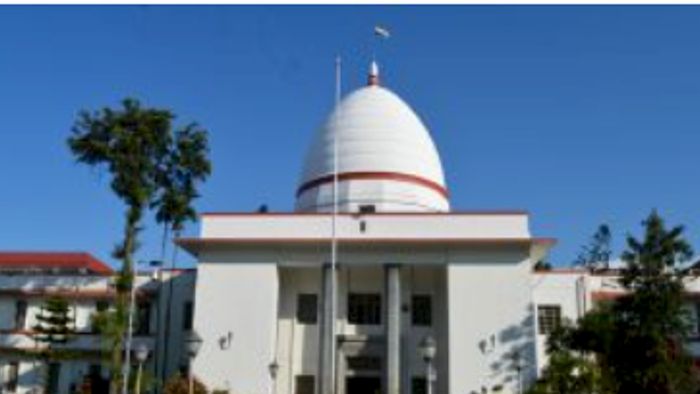
- Sep 24, 2026,
- Updated Sep 24, 2026, 4:48 PM IST
The Gauhati High Court has upheld the Assam government’s decision to convert Guwahati’s Routes 23 and 36 into Green Routes and phase out diesel-operated city buses from the two routes.
Justice Sanjay Kumar Medhi dismissed writ petitions filed by the Metropolitan Transport Association, Guwahati, challenging decisions of the Regional Transport Authority (RTA), Kamrup, to withdraw diesel buses from the two routes and reroute existing operators.
The court held that the RTA had acted pursuant to a Cabinet decision of August 20, 2021, aimed at making Guwahati free from carbon emissions. It rejected the petitioners’ contention that the RTA lacked jurisdiction, observing that its subsequent resolutions were consequential to the state government’s policy decision.
The bus operators had argued that their vehicles held valid permits and that the RTA could neither prevent them from operating on the permitted routes nor compel them to shift to other routes without following the statutory procedure under the Motor Vehicles Act, 1988.
The state government, however, told the court that the Green Route policy was introduced as part of its efforts to reduce carbon emissions. Bus operators were given two options — convert their vehicles to CNG or electric vehicles, or shift to one of 10 alternative routes.
According to the state, around 100 of more than 150 buses had already shifted to alternative routes.
The High Court also rejected the petitioners’ reliance on Sections 98 to 105 of the Motor Vehicles Act, holding that these provisions fall under Chapter VI, which deals with special provisions relating to State Transport Undertakings, and were therefore not applicable to the case.
On the challenge to the 2021 Cabinet decision, the court held that the absence of a separate communication conveying the decision did not invalidate the policy. It noted that the policy had subsequently been acted upon through meetings involving the Assam State Transport Corporation, Transport Department and RTA, with participation from stakeholders, including representatives of the petitioner association.
The court also rejected the argument that the decision violated principles of natural justice. It observed that individual notices were not required before taking a policy decision and noted that representatives of bus owners had participated in RTA meetings where the transition to Green Routes had been discussed over a period of time.
On the modification of permits, the court relied on Section 72(2)(xxii) of the Motor Vehicles Act, holding that the RTA could vary permit conditions after giving the prescribed notice.
The court also distinguished the Supreme Court judgment in State of West Bengal v. S.K. Nurul Amin (2010), cited by the petitioners, noting that the case concerned a different statutory provision.
The High Court further referred to an earlier Division Bench order from December 2025, which had observed that the RTA’s decision could amount to a variation of permit conditions rather than the implementation of a new transport scheme.
The Division Bench had also rejected the argument that the Green Routes were meant exclusively for state-operated buses, observing that the routes were open to CNG and electric buses.
On the petitioners’ challenge under Article 19(1)(g), the court relied on the Supreme Court’s decision in T.B. Ibrahim v. Regional Transport Authority (1952), holding that there is no fundamental right to carry on a business at a particular place and that reasonable restrictions can be imposed in the interest of public convenience where the authority has the power to do so.
The High Court accordingly dismissed both writ petitions, upholding the Green Route policy for Routes 23 and 36.
The court, however, left open the bus operators’ grievance regarding permit fees, allowing them to approach the appropriate forum if the issue remains unresolved.