Guwahati students carry out hands-on water testing, audit to map local risks
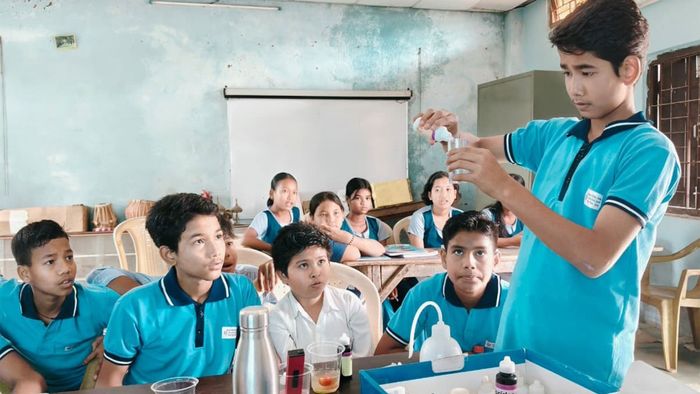
Students at Krishnanagar Vidyapeeth High School tested water samples and audited campus use during an interactive workshop. The exercise linked science lessons with local water challenges and wider concerns over conservation.
- May 15, 2026,
- Updated May 15, 2026, 4:18 PM IST
As concerns over water scarcity, pollution and climate change continue to grow worldwide, a group of students in Guwahati recently stepped beyond textbooks to understand the crisis through hands-on scientific learning and community-based activities.
An interactive water testing and awareness workshop conducted at Krishnanagar Vidyapeeth High School encouraged students to apply classroom lessons to real environmental challenges, highlighting the importance of practical education in building environmental responsibility among young people.
The programme was organised by environmental organisation Aaranyak in collaboration with the Pollution Control Board, Samagra Shiksha Axom and Wipro Earthian.
During the workshop, students collected water samples from their homes and school campus and tested them for parameters such as pH, temperature, total dissolved solids (TDS), hardness, alkalinity, chloride, nitrate, iron and fluoride. The activity aimed to help students understand how scientific concepts taught in classrooms can be used to assess and address real-life environmental issues.
The initiative also focused on encouraging students to become more aware of local environmental concerns, particularly in Guwahati, where some areas face recurring floods and waterlogging while others struggle with shortages of safe drinking water.
In addition to laboratory-style testing, students conducted a water audit of the school campus and studied patterns of water use in their neighbourhoods. They were also asked to document public attitudes towards water conservation and pollution, helping connect scientific learning with social awareness and civic responsibility.
“These activities not only made learning easier, but also inspired me to think differently about water-related issues in my locality,” said Pratisma Rabha, a Class VIII student who participated in the programme.
Senior Science Teacher Bhaskar Jyoti Sarma said such activities help students understand the relevance of academic lessons beyond examinations and classrooms. “Practical exercises like these help bridge theoretical learning with real environmental challenges,” he said.
The workshop comes at a time when concerns over global water security are intensifying. According to the World Health Organisation and UNICEF, nearly 2.1 billion people worldwide still lack access to safe drinking water, a crisis worsened by climate change and pollution. Adding urgency to the issue, a United Nations report released in January 2026 warned that the Earth's water reservoirs have been exploited beyond their renewable limits, pushing many regions into an irreversible "post-permanent crisis" stage.
Educators and environmental experts have increasingly stressed the need for experiential learning programmes that not only strengthen scientific understanding but also encourage students to take informed action towards protecting natural resources and improving their surroundings.