Guwahati study records 8 owl species, flags urban noise as major challenge
A new scientific study has documented eight owl species across Guwahati, highlighting the city's nocturnal biodiversity while identifying urban noise pollution as a major challenge in detecting the elusive birds.
- Oct 28, 2026,
- Updated Oct 28, 2026, 2:44 PM IST
A new scientific study has documented eight owl species across Guwahati, highlighting the city's nocturnal biodiversity while identifying urban noise pollution as a major challenge in detecting the elusive birds.
Published in the journal Urban Ecosystems, the study recorded owls in 24 of the 33 one-square-kilometre grid cells surveyed across the city between November 2023 and July 2025.
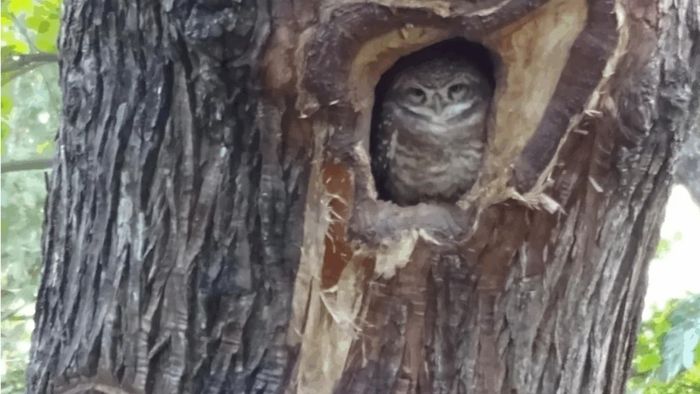
The Barn Owl and Spotted Owlet were the most frequently detected species, while six other species — Brown Hawk Owl, Brown Fish Owl, Collared Scops Owl, Mountain Scops Owl, Oriental Scops Owl and Asian Barred Owlet — were also recorded during the survey.
The findings underline the ecological importance of Guwahati's remaining green spaces and the need to incorporate wildlife conservation into urban planning as the city continues to expand.
Owls play an important role in urban ecosystems, particularly by helping regulate rodent populations. Their presence across multiple surveyed areas suggests that the city continues to provide habitats for a diverse range of nocturnal birds, even as urbanisation transforms its landscape.
Urban noise poses challenge to owl surveys
The study identified background noise, particularly traffic and other sounds associated with the urban environment, as a factor that could mask owl calls and reduce the likelihood of detecting the birds during surveys.
Researchers highlighted that the failure to detect an owl does not necessarily mean the species is absent from an area. When calls are obscured by surrounding noise, the likelihood of recording a bird can decline, potentially affecting assessments of urban wildlife populations.
The findings point to the importance of accounting for detection limitations when monitoring biodiversity in cities, where noise pollution can interfere with wildlife surveys.
Green spaces key to urban biodiversity
The study also draws attention to the importance of conserving vegetation, wetlands, mature trees and other green patches that provide habitats for wildlife amid changing land use.
As Guwahati's built-up areas expand, protecting these spaces could help maintain ecological connectivity and support species that depend on suitable nesting, roosting and feeding habitats.
The findings suggest that urban development and biodiversity conservation need not be competing priorities. Incorporating habitat protection, noise management and long-term wildlife monitoring into city planning could help safeguard the ecological diversity that remains within Guwahati.
The research adds to the understanding of how wildlife adapts to urban environments and highlights the need for more systematic monitoring of species that are often overlooked because of their nocturnal habits.
With eight owl species recorded across the surveyed grid cells, the study offers a glimpse into Guwahati's lesser-known wildlife and underscores the importance of preserving natural habitats as the city grows.