IIT Guwahati develops four-in-one yarn winding machine to ease handloom weavers’ workload
IIT Guwahati has developed a machine combining four yarn winding operations. The technology aims to improve productivity while reducing weavers' physical strain.
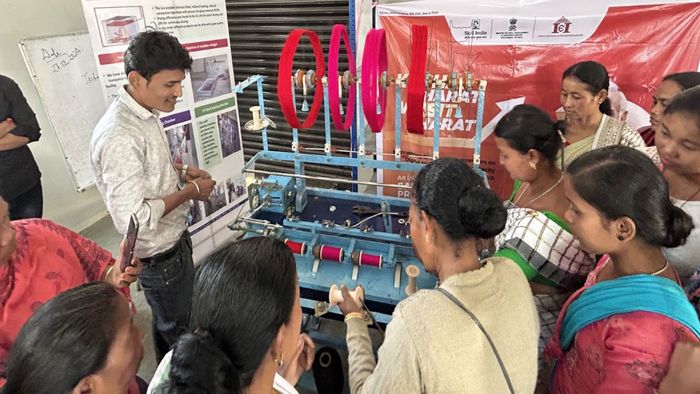
- Nov 10, 2026,
- Updated Nov 10, 2026, 8:13 PM IST
The Indian Institute of Technology (IIT) Guwahati has developed a four-in-one yarn winding machine aimed at reducing the manual labour involved in handloom weaving and improving productivity among traditional weavers.
Developed by the institute’s Rural Technology Action Group (RuTAG), the machine combines four yarn winding operations into a single unit, addressing a time-consuming stage of the weaving process that is still largely performed manually in rural households.
Yarn winding is an essential preparatory process in handloom weaving, involving the transfer of yarn from hanks, cones or other packages onto bobbins and pirns before it can be used on looms. Conventional methods, often involving manually operated charkhas, can process only around 1-2 kg of yarn a day, depending on working conditions.
The repetitive nature of the work also requires weavers to maintain awkward postures for extended periods, increasing the risk of body pain and other physical discomfort.
To address these challenges, RuTAG IIT Guwahati has integrated four functions into the machine: hank-to-bobbin winding, bobbin-to-pirn winding, doubling of yarn and cone-to-bobbin winding. This allows weavers to carry out different yarn preparation activities using a single machine.
The technology has been tested at several weaving locations across Assam and Meghalaya, where participating weavers provided feedback on its convenience and efficiency.
Explaining the development, Prof Sashindra K Kakoty, coordinator of RuTAG at IIT Guwahati, said the team had initially developed separate machines for hank-to-bobbin and pirn winding before exploring the possibility of combining the operations into one unit.
The team subsequently incorporated yarn doubling, which involves combining two or more strands into a single package for further processing, as well as a provision for winding yarn directly from cones or reels onto smaller bobbins.
Kakoty said the initiative was aimed at increasing productivity and improving profitability in the weaving sector while reducing the physical strain associated with manual winding.
He added that the machine could also benefit powerloom operators by reducing the time required for yarn preparation.
By bringing multiple winding operations together, the machine is expected to reduce the time and effort spent on yarn preparation without requiring weavers to abandon their existing weaving practices.
Commercialisation of the machine is currently underway. However, interested weavers can contact RuTAG IIT Guwahati for procurement and demonstrations.
The initiative is part of the institute's efforts to develop practical technological solutions for traditional crafts and rural livelihoods, particularly in the handloom sector, which supports communities across the Northeast.