IIT Guwahati develops low-cost device for instant detection of water toxicants
IIT Guwahati researchers have developed E-Eye, a portable device that detects multiple toxicants in water and other samples on site. The low-cost system can transmit results wirelessly and is being readied for wider industrial and government use.
- Aug 06, 2026,
- Updated Aug 06, 2026, 4:09 PM IST
Researchers at IIT Guwahati have developed a portable optical sensing device capable of instantly detecting multiple toxicants in water and other biological samples, offering a low-cost solution for rapid water quality monitoring.
The device, named E-Eye, has been designed to support the Centre's Jal Jeevan Mission by enabling on-site detection of contaminants while wirelessly transmitting data to water treatment facilities. According to the institute, the technology eliminates the need for expensive laboratory equipment and allows testing directly at the source.
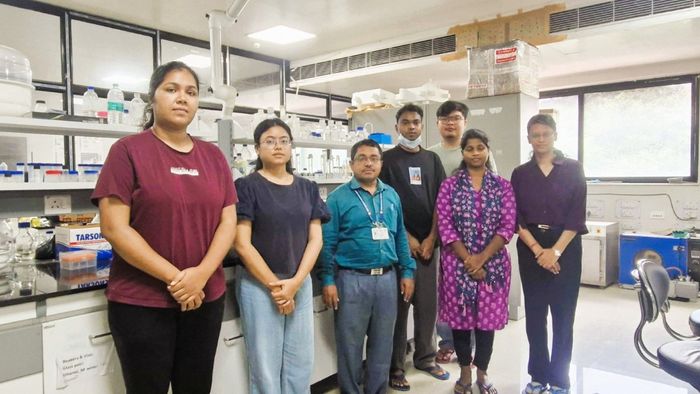
The research findings have been published in the IEEE Sensors Journal. The paper was co-authored by IIT Guwahati professors Tapas K Mandal and Harshal B Nemade, along with research scholars Shrikant Kashyap, Smriti Sachan and Neha Majee, Maitrayee Bhuyan of KIIT Bhubaneswar, and Humayun Kabir of Ramakrishna Mission Residential College, Kolkata.
The device works by triggering a chemical reaction that produces a coloured compound, with the intensity of the colour indicating the concentration of toxicants. It then uses optical sensing to analyse the sample, converts the readings into digital data and displays the contaminant levels.
Laboratory evaluations showed that E-Eye delivers results comparable to conventional UV-Visible and Atomic Absorption Spectrophotometers while offering additional digital integration features, the institute said.
"Our device operates on the Beer-Lambert law by integrating optical sensing with digital electronics to generate accurate quantitative measurements. It has successfully detected toxicants including arsenic, lead, iron, chromium, fluoride and Escherichia coli bacteria," said Tapas K Mandal, professor in the Department of Chemical Engineering at IIT Guwahati.
The prototype has been developed at a cost of around Rs 3,500, while each test costs approximately Rs 2. The researchers said production costs could be reduced further through large-scale manufacturing.
Beyond water quality assessment, E-Eye can also analyse toxicants in environmental and biological samples, vegetables, food products, tea, herbal products, soil and milk. The research team has tested more than 2,700 samples using the device, recording accurate results.
Harshal B Nemade, professor in the Department of Electronics and Electrical Engineering at IIT Guwahati, said the technology could be used by government agencies, industries and private enterprises.
"It can support agencies under the Ministry of Jal Shakti in water quality monitoring, assist food and herbal product manufacturers, and help industries monitor liquid effluents containing heavy metals, bacteria and odour-causing compounds," he said.
The project received funding from the Ministry of Electronics and Information Technology (MeitY). To commercialise the technology, the researchers have established a start-up, ENVIONIX Labs Pvt Ltd, and are planning to collaborate with industry partners for technology transfer.
The team is now working on integrating solar panels into the device to make it self-sustaining and enable cloud connectivity for remote monitoring and data management.