IIT Guwahati develops advanced nanomaterial technology to combat counterfeiting
IIT Guwahati researchers have developed a light-emitting perovskite nanomaterial for anti-counterfeiting use. The technology can create heat-resistant, hard-to-copy security patterns for authentication and advanced displays.
- May 25, 2026,
- Updated May 25, 2026, 2:51 PM IST
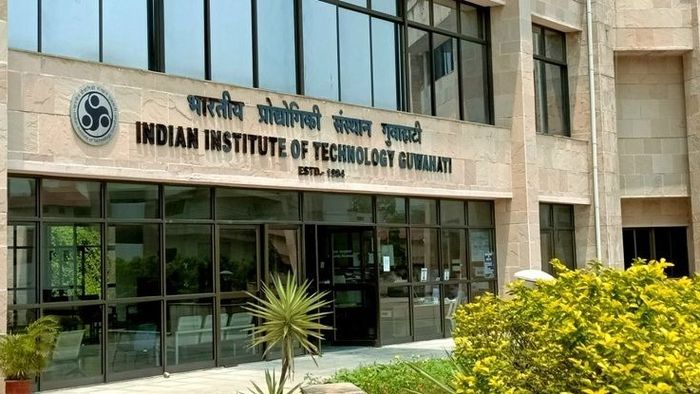
Researchers at Indian Institute of Technology (IIT) Guwahati have developed an advanced light-emitting perovskite nanomaterial that could significantly strengthen protection against fake currency, forged documents, counterfeit products, and identity fraud.
The research team has created specialised nanocrystals capable of generating highly secure light-based patterns that are difficult to replicate using conventional printing, imaging, or copying technologies.
Counterfeiting has emerged as a major global challenge affecting multiple sectors, including banking, pharmaceuticals, electronics, luxury goods, and identity documentation. With rapid advancements in technology, counterfeiters have increasingly managed to duplicate traditional security features such as QR codes, holograms, barcodes, and watermarks with high accuracy.
To address this challenge, the IIT Guwahati researchers developed nanocrystals with a unique double-layer protective coating, making them highly resistant to heat and chemicals while preserving their light-emitting properties.
Using an advanced direct laser writing technique, the researchers successfully created microscopic security patterns from these materials. The multilayer coating enabled the team to generate these intricate patterns without relying on traditional lithographic masks.
According to researchers, the technology achieved ultra-high resolutions ranging between 10 to 40 micrometers, allowing the creation of extremely complex patterns and encoded information that are difficult to forge or duplicate.
The team stated that the developed laser patterning technique has applications beyond anti-counterfeiting technologies. It can also be utilised in the development of advanced micro-LED displays for smartphones, wearable devices, and Augmented Reality (AR) systems.
Researchers further noted that the innovation has broad industrial relevance and can be applied in sectors where authentication, product verification, and security are critical.
The development highlights the growing role of Indian scientific research institutions in creating advanced technologies with practical applications in security, electronics, and next-generation digital systems.