“I’ll come home when you are alone,” GMCH principal allegedly tells doctor; CM orders probe
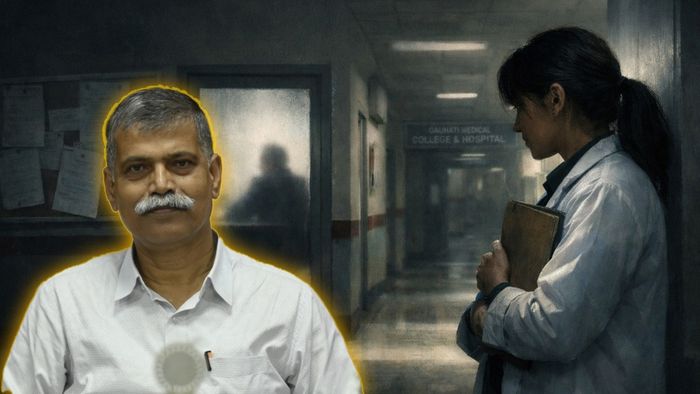
A senior woman doctor of the Gauhati Medical College and Hospital (GMCH), who is a widow, has accused the institution’s Principal, Achyut Baishya, of workplace harassment, prompting the registration of an FIR and the constitution of a government inquiry committee.
- Feb 16, 2026,
- Updated Feb 16, 2026, 8:00 PM IST
A senior woman doctor of the Gauhati Medical College and Hospital (GMCH), who is a widow, has accused the institution’s Principal, Achyut Baishya, of workplace harassment, prompting the registration of an FIR and the constitution of a government inquiry committee.
The Associate Professor and former Head of the Department of Clinical Psychology submitted a written complaint to the Chief Minister’s Office on February 6, alleging inappropriate remarks, intimidation and sustained professional harassment during her tenure.
In her police complaint, she stated that after the independent Department of Clinical Psychology was established, she initially received appreciation from the administration. However, she alleged that the situation changed when the principal insisted that she meet him alone in his office building, though routine official interactions could take place within the hospital premises. She said she felt uncomfortable and avoided the meeting, adding that the exchanges were documented through WhatsApp messages.
The doctor further alleged that during a subsequent interaction, the principal asked her to call him when she was “absolutely free and alone” and made remarks suggesting she could meet him anytime as “the door was always open.” She described these statements as inappropriate and distressing, particularly given the professional hierarchy.
According to the complaint, the alleged conduct caused her significant mental anguish. She claimed that as a widowed woman and a subordinate officer, she felt constrained in responding directly.
Beyond the alleged remarks, the doctor accused the principal of administrative victimisation. She stated that despite the formal establishment of the Department of Clinical Psychology, she was initially not given charge as Head of Department, requiring intervention from the Director of Medical Education. She further alleged that her proposals to introduce academic courses, recruit faculty and expand the department were repeatedly delayed or obstructed.
In her representation, she also referred to a remark allegedly made by the principal — “don’t go too fast or you will be derailed”, which she said caused her emotional distress. She alleged that during a discussion on research initiatives, he suggested including his wife in departmental research projects, which she found inappropriate.
The dispute intensified when a notification was issued cancelling the Department of Clinical Psychology and merging it with another department. The doctor claimed she was not given a clear explanation for the decision and was later informed that colleagues were against her. She maintained that she had independently trained 57 interns and initiated steps to expand mental health services before the department was dismantled.
Following her complaint, an FIR was registered at the Panbazar Women Police Station in Guwahati. Police have begun a preliminary investigation. The complaint reportedly names multiple victims.
Responding to the allegations, Dr Baishya told India Today NE that he had been instructed by the authorities not to speak to the media at this stage. He said he has prepared all necessary documents to present before the inquiry committee. He further stated that the department’s takeover in July was carried out as per a government notification and that the harassment complaint was filed only recently.
Meanwhile, the Assam Government has constituted a two-member inquiry committee comprising a senior woman advocate and a woman government officer to examine the allegations and submit its findings.
With both a police investigation and an official inquiry underway, the developments have sparked debate over workplace safety, institutional accountability and the protection of women professionals in public institutions.