Illegal sand mining threatens Kulsi River, endangered dolphins in Assam
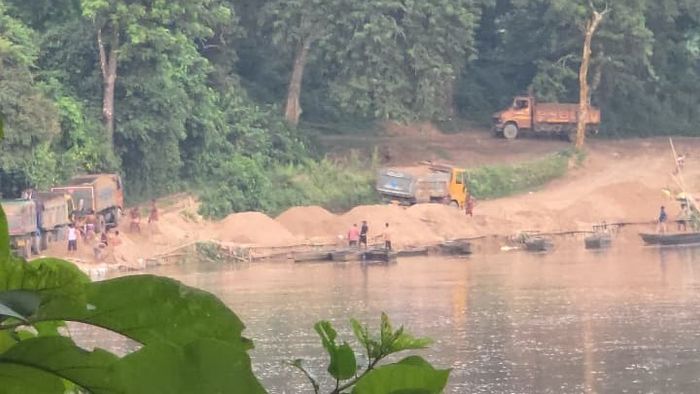
Alleged large-scale illegal sand mining in the Kulsi River under the Boko-Chaygaon Assembly constituency in Assam's Kamrup district has raised concerns over environmental degradation and the survival of the endangered Gangetic river dolphin.
- Sep 01, 2026,
- Updated Sep 01, 2026, 7:59 PM IST
Alleged large-scale illegal sand mining in the Kulsi River under the Boko-Chaygaon Assembly constituency in Assam's Kamrup district has raised concerns over environmental degradation and the survival of the endangered Gangetic river dolphin.
According to local residents, a sand mining racket is allegedly operating near the Kulsi Range Forest Office under the West Kamrup Forest Division. Hundreds of sand-laden trucks reportedly leave the area at night, transporting sand towards Guwahati and other urban centres.
Residents have alleged that despite the scale of the activity, the Forest Department has failed to take effective action against the illegal mining operations.
The allegations have also raised questions over the alleged misuse of Electronic Minor Mineral Transit Passes (Brown E-TPs). Locals claimed that some transit passes carried by trucks mention Ukiam in Meghalaya as the source of the sand being transported to Guwahati.
However, residents of the Garo community in the Ukiam area along the Assam-Meghalaya border reportedly said that no sand mining is currently being carried out there.
This has led to concerns over whether sand extracted illegally from the Kulsi River is being shown in transit documents as having originated in Meghalaya.
West Kamrup Forest Division officer Subodh Talukdar said the department could check the Brown E-TPs carried by sand-laden trucks but was currently unable to independently verify the actual location from where the sand had been extracted.
The statement has fuelled concerns over possible loopholes in the transit-pass system and the alleged use of documentation to facilitate illegal sand transportation.
Threat to river dolphins
The Kulsi River is known for its population of Gangetic river dolphins and is considered an important habitat for the endangered aquatic species. The river and its surrounding landscape also attract tourists and nature enthusiasts.
According to information from a dolphin population survey conducted in the Kulsi River in 2026, around 20 dolphins were reportedly recorded.
Concerned residents fear that continued sand extraction could alter the riverbed, affect water flow and severely degrade the dolphins' habitat.
They alleged that dolphins could also be injured or killed by machinery deployed for sand extraction, while diesel, used oil and other pollutants generated during mining operations could contaminate the river and pose additional risks to aquatic life.
Residents have also questioned the interstate transportation component of the Brown E-TP system, asking why Meghalaya would allegedly be shown as the source of sand if the material is actually being extracted and sold from Assam.
They have sought clarification on whether any interstate transportation fees are being paid to Meghalaya and, if not, why the state is being mentioned as the source in the transit documentation.
Residents of Kulsi and Ukiam have urged the governments of Assam and Meghalaya to conduct a thorough investigation into the alleged misuse of Brown E-TPs and illegal sand mining network in the region.
They have demanded strict action against those found involved in illegal extraction, transportation or misuse of transit documents.
Locals have also appealed to the Assam government and Forest Minister Jayanta Malla Baruah to intervene and take immediate steps to protect the Kulsi River and its endangered dolphin population.
They further urged the government to develop Kulsi and its adjoining areas as an eco-tourism destination, arguing that conservation of the river and its wildlife could generate sustainable economic opportunities while protecting the fragile ecosystem.