Leaked audio sparks controversy over alleged blackmail bid by Assam media owner
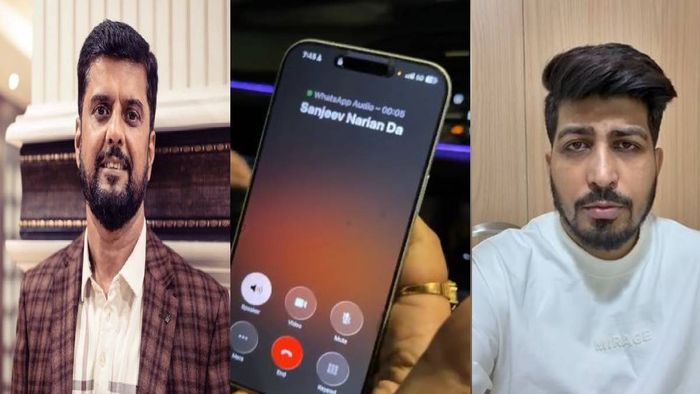
A leaked audio conversation involving Prag News owner Sanjive Narain and Nayan Ghosh, a businessman whom the channel had dubbed a drug dealer, has triggered a major controversy in Assam. Ghosh has accused Narain of demanding money to prevent his channel from airing a damaging news report against him. Narain says conversation concerned a Mercedes car deal.
- Oct 14, 2026,
- Updated Oct 14, 2026, 2:30 PM IST
A leaked audio conversation allegedly involving Prag News owner Sanjive Narain and businessman Nayan Ghosh has triggered a controversy in Assam, with allegations that the media owner demanded money to prevent his channel from broadcasting a damaging news report against Ghosh, whom the same channel had earlier accused of involvement in drug trafficking.
While Ghosh has alleged that Narain sought money to stop the second part of the report, Narain has rejected the allegation, claiming that the conversation concerned the purchase of a Mercedes car. Narain also owns a Mercedes-Benz dealership in Guwahati.
Addressing a press conference after the audio went viral, Narain did not deny having a conversation with Ghosh. He said he knew Ghosh as a Mercedes customer and became aware of the allegations about his involvement in drug trafficking only after Prag News aired its report.
However, the audio circulating in the public domain contains no explicit reference to the purchase of a car.
Instead, Narain is purportedly heard asking Ghosh why so many people, including his own editors, disliked him. He then appears to tell Ghosh that the channel was ready with the second part of the report against him, but he had somehow managed to delay its broadcast.
In the conversation, Narain allegedly says he had convinced his editors to hold back the report because Ghosh would send the bastu, an Assamese word meaning thing. He then asks Ghosh to send it quickly.
Ghosh responds that he would speak to the person who keeps his money and that this person would call Narain. He also requests Narain to take the call.
The exchange has raised questions about what the bastu referred to. While Narain maintains that the conversation concerned a car transaction, Ghosh alleges that it referred to money demanded in exchange for suppressing the news report.
The authenticity and completeness of the leaked recording have not been independently established, and the conversation's full context remains unclear.
Narain has announced that he intends to approach the courts against Ghosh for leaking the conversation and against news organisations that aired the recording, accusing them of damaging his reputation. He has also questioned the integrity of the leaked audio.
Ghosh, who is currently outside Assam, has released a video denying any involvement in drug trafficking. Describing himself as a businessman, he reiterated his allegation that Narain demanded money to prevent Prag News from broadcasting what he described as false and fabricated reports against him.
Ghosh has also claimed that he had previously approached the courts against the channel over allegedly false reports and secured a restraint order. India Today has not independently verified this claim.
Beyond the allegations and counter-allegations, the controversy has raised questions about the role of the Assam Police, particularly against the backdrop of chief minister Himanta Biswa Sarma’s repeated declarations of zero tolerance towards drug trafficking.
The first question concerns the basis of Prag News’s allegations against Ghosh. If the channel had credible evidence linking him to drug trafficking, did it share that information with the police? Has the police investigated the allegations or registered any case against him?
Another aspect of the leaked conversation has added to these questions. Ghosh is purportedly heard claiming that several police officials had forwarded him clips of the news reports broadcast against him. The claim, if verified, could warrant an examination of the nature of his communication with these officials, although forwarding news clips would not, by itself, establish wrongdoing.
The second issue concerns Ghosh's allegation that the threat of further adverse news coverage was used to demand money from him. If an investigation establishes that fabricated allegations were used to extract money in exchange for suppressing a report, it could raise serious questions of extortion and other criminal misconduct.
However, any such conclusion would depend on establishing the authenticity of the recording, the context of the conversation and the purpose of any proposed payment. Neither the leaked audio nor the competing allegations conclusively establish wrongdoing.
India Today approached the Assam Police to ask whether it would take cognisance of the publicly unfolding controversy involving a person accused of drug trafficking and allegations that money was demanded to suppress news coverage. However, the Commissioner of Police, Guwahati, declined to comment.
The controversy has brought into focus two distinct issues. One is whether the drug-trafficking allegations aired by Prag News have any evidentiary basis and warrant police action. The other is whether there was an attempt to misuse a news platform to obtain money by threatening adverse coverage.
Both questions require independent examination. The information now in the public domain also provides grounds for the police to assess whether any cognisable offence is disclosed and whether further inquiry or investigation is warranted under the law.
If the allegations against Ghosh are substantiated, questions will arise about what action the police have taken. If the allegations were fabricated to demand money, the conduct of those involved in preparing and controlling the news coverage would come under scrutiny.
The dispute has thus moved beyond a confrontation between a media owner and a person targeted by his channel’s reporting. It has raised wider concerns about media accountability, the potential misuse of editorial power and the response of law-enforcement agencies.
An independent investigation could help establish the facts behind the competing claims.