Mamoni Raisom Goswami: Remembering the literary voice whose words continue to live on
Assam remembers Mamoni Raisom Goswami on her death anniversary. Her writing and peace efforts continue to resonate across generations.
- Nov 29, 2026,
- Updated Nov 29, 2026, 12:29 PM IST
Mamoni Raisom Goswami: Remembering the literary voice whose words continue to live on
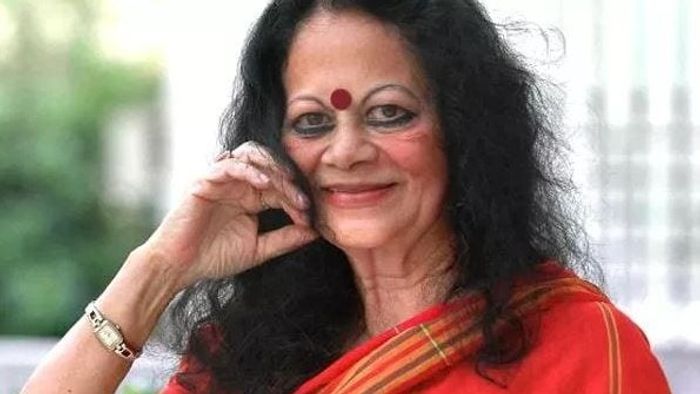
A writer may leave the world, but the words they leave behind can continue to inspire generations. Fifteen years after her passing, legendary Assamese writer, poet and scholar Mamoni Raisom Goswami, fondly remembered as Mamoni Baideo, remains one of the most influential literary voices of Assam.
November 29 marks her death anniversary. Born on November 14, 1942, in Guwahati, Indira Goswami, who wrote under the name Mamoni Raisom Goswami, built a remarkable literary legacy through stories and novels that explored human suffering, social inequalities, cultural traditions and the complexities of society.
Her journey in literature began at a young age. While still a student, she published her first collection of short stories, Chinaki Morom, in 1962. Over the years, she developed a distinctive literary voice, bringing attention to lives and experiences that often remained on the margins of mainstream narratives.
Among her most celebrated works are The Moth-Eaten Howdah of the Tusker, Pages Stained with Blood, The Man from Chinnamasta, The Blue-Necked Braja and The Chenab's Current. Several of her works have been translated into English, allowing her stories to reach readers beyond Assam and across the country.
Her writing often drew from lived experiences and extensive research. In The Blue-Necked Braja, she explored the difficult lives of widows in Vrindavan, while Pages Stained with Blood addressed the suffering of Sikhs during the 1984 anti-Sikh riots in Delhi. Through The Man from Chinnamasta, she questioned the practice of animal sacrifice and opened up a wider debate on faith and tradition.
Goswami was also a respected academic. After completing her education in Assamese literature at Cotton College and Gauhati University, she went on to teach at the University of Delhi, where she later headed the Department of Modern Indian Languages and Literary Studies.
Her contribution extended beyond literature. She played a significant role in efforts to facilitate peace talks between the United Liberation Front of Asom (ULFA) and the Government of India. She was associated with the formation of the People's Consultative Group, which sought to create a platform for dialogue. She described herself as an observer of the peace process.
Her literary achievements brought her several major honours, including the Sahitya Akademi Award in 1983 and the Jnanpith Award in 2000. She also received the Principal Prince Claus Award in 2008, among other recognitions.
Mamoni Baideo passed away on November 29, 2011, at Gauhati Medical College and Hospital. Yet, her departure did not mark the end of her journey. Her books continue to be read, studied, translated and discussed, carrying her observations and questions into new generations.
A poet and writer can never truly be forgotten when their words continue to speak to society. Mamoni Raisom Goswami remains an enduring example of how literature can cross boundaries of language, geography and time, ensuring that a writer's voice lives on long after their lifetime.