Master sculptor Ram Sutar, who shaped India’s iconic statues, including Lachit Barphukan in Guwahati, no more
The nation on Thursday, December 18 mourned the demise of legendary sculptor and Padma Bhushan awardee Ram Sutar, whose monumental works redefined public sculpture in India, with political leaders across the country paying heartfelt tributes to the master artist. Sutar passed away at his Noida residence late Wednesday night at the age of 100, following age-related health complications, his family confirmed.
- Dec 18, 2025,
- Updated Dec 18, 2025, 2:30 PM IST
The nation on Thursday, December 18 mourned the demise of legendary sculptor and Padma Bhushan awardee Ram Sutar, whose monumental works redefined public sculpture in India, with political leaders across the country paying heartfelt tributes to the master artist. Sutar passed away at his Noida residence late Wednesday night at the age of 100, following age-related health complications, his family confirmed.
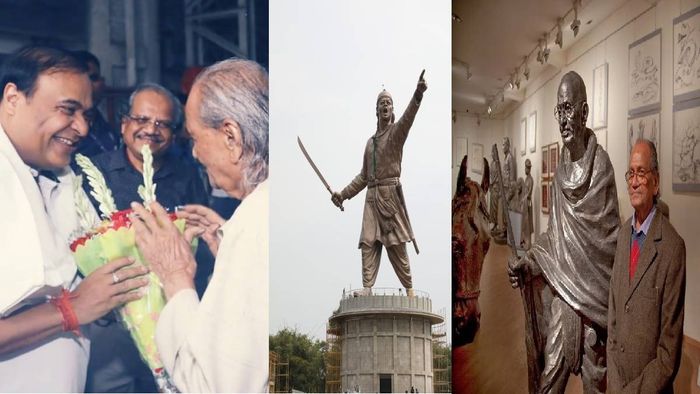
Expressing deep sorrow, Assam Chief Minister Himanta Biswa Sarma paid tribute to the veteran sculptor, recalling his invaluable contribution to Assam’s cultural and historical legacy. In a post on X, Sarma said Assam was privileged to have Ram Sutar sculpt the grand statue of Lachit Barphukan in Guwahati and the soon-to-be-unveiled statue of Lokapriya Gopinath Bardoloi.
“His personal involvement in breathing life into the statues of Assam’s heroes from two different eras showed his extraordinary range and exceptional craftsmanship. In his passing, the nation has truly lost an artist par excellence,” the Chief Minister wrote, extending condolences to the bereaved family.
Ram Sutar, best known internationally for designing the Statue of Unity in Gujarat, the world’s tallest statue dedicated to Sardar Vallabhbhai Patel, was widely celebrated for bringing global recognition to Indian sculpture. Over a prolific career spanning several decades, his works came to symbolise national pride, historical memory, and artistic excellence.
Confirming his death, Sutar’s son Anil Sutar said the sculptor passed away peacefully at home around midnight on December 17. “He had been suffering from age-related health issues,” he said in a statement.
Prime Minister Narendra Modi also expressed deep grief over the sculptor’s demise, describing Ram Sutar as a visionary whose works will continue to inspire generations. “His mastery gave India some of its most iconic landmarks. His works will always be admired as powerful expressions of India’s history, culture, and collective spirit,” the Prime Minister said, adding that Sutar had “immortalised national pride for generations to come.”
Leaders from Maharashtra, including Chief Minister Devendra Fadnavis and Deputy Chief Ministers Ajit Pawar and Eknath Shinde, also paid homage, stating that Ram Sutar’s passing marks the end of an era in the field of sculpture.
Renowned for his command over bronze and stone, Ram Sutar leaves behind a towering artistic legacy that has profoundly shaped India’s cultural landscape and public art tradition.