Me-Dam-Me-Phi: A living tradition linking Tai Ahoms to their past
Me-Dam-Me-Phi, Tai Ahom tradition, ancestor worship, Indian cultural rituals, Tai Ahom community, ancestral blessings, cultural heritage India, traditional ceremonies India, Tai Ahom festival, peace and prosperity rituals
- Jan 31, 2026,
- Updated Jan 31, 2026, 9:57 AM IST
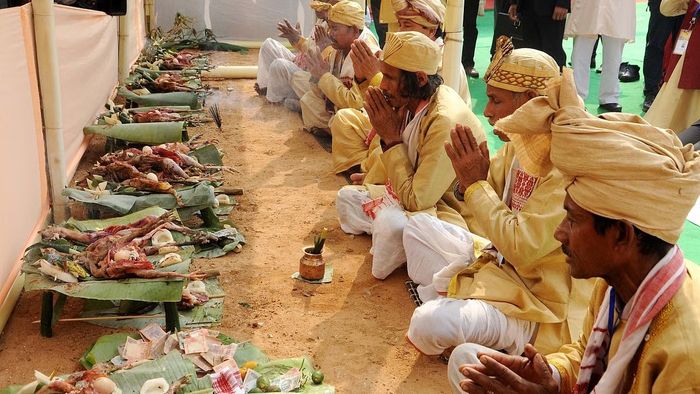
Every year, January 31 is observed with deep reverence as Me-Dam-Me-Phi, a sacred ancestral festival of the Tai Ahom community of Assam. On this day, the Tai Ahoms collectively remember, honour, and offer prayers to their forefathers, seeking their blessings for peace, prosperity, and protection.
The term Me-Dam-Me-Phi itself reflects the core philosophy of the ritual:
• “Me” means to offer or perform libation,
• “Dam” refers to the souls of the deceased ancestors, and
• “Phi” signifies the supreme ancestral spirits or divine souls.
Together, Me-Dam-Me-Phi symbolises the age-old belief that ancestors continue to guide and safeguard the living.
Collective Worship and Sacred Structures
The festival is marked by community participation. Villagers come together to construct an eight-sided temporary shrine, known as Ho-Phi (Deushal). Inside the shrine, eight ceremonial trays (Mehenga or Sharai/Xorai) are arranged, and prayers are offered to eight revered ancestral spirits (Phi), including the primordial ancestor Lengdon.
Rituals, Symbols, and Community Feast
A key feature of the festival is the hoisting of the “Ngai-Ngao-Kham”, the golden dragon-emblazoned flag, symbolising power, continuity, and divine protection. This is followed by a community feast, reinforcing social unity. Historically, the first public celebration of Me-Dam-Me-Phi in Assam is believed to have been held at Budha Dangoria Than in Tipam.
Public and Domestic Observance
While Me-Dam-Me-Phi is celebrated publicly, it is also observed within households. In domestic rituals, worship is performed near the southern pillar of the kitchen, known as Pho-Kam. Five ritual offerings (Maihang) are presented, and ancestors are invoked with prayers and offerings.
Belief System and Ancestral Spirits
According to Tai Ahom belief, after death, ancestors become Dam-Phi, divine beings who reside in one of the seven heavenly realms. They do not believe in rebirth of the soul; instead, ancestors act as guardians of their descendants, including children, grandchildren, and extended family members.
Offerings made during the rituals include cooked rice with fish and meat, payas (sweet rice), sweets, and local rice beer (Luklao or Saaj). Through these offerings, families seek Janming, which is the blessings of their ancestors. Prayers are also conveyed to gods and the supreme divine power through the ancestors.
Sacrifice and Folk Practices
In certain traditional practices, animal sacrifice, particularly of poultry is performed with the chanting of mantras, reflecting ancient folk beliefs that continue to survive in parts of the community.
Ancestors as the Pathway to Divinity
A fundamental belief among the Tai Ahoms is that gods can only be reached through ancestors. The spirits of departed forefathers become household deities who protect and guide the living family members.
Classification of Ancestral Spirits
Ancestors are categorised into different groups:
• Ghai-Dam: The principal ancestors of a household (great-grandparents and elders).
• Chi-Ren-Dam: Ancestors up to four generations.
• Jakrua-Dam: Those who died unmarried, childless, at a young age, or with physical or mental disabilities.
• Na-Dam: Recently deceased members of the family.
Except for Jakrua-Dam, the others are collectively regarded as Griha-Dam (household ancestors). During Me-Dam-Me-Phi, both Chao-Phi (ancestral spirits) and Dam-Chao-Phi are worshipped, including revered entities such as Lengdon, Ai Lengdin, Ja-Ching-Pha, Khaw Kham, and others.
Role of Priests and Sacred Texts
The religious rites are conducted by traditional Tai Ahom priests - Mohan, Deodhai, and Bailung. Sacred mantras are recited from ancient Tai manuscripts such as the Fralung and Ban-Phi, preserving centuries-old spiritual knowledge.
Historical Roots: From Sukaphaa to the Ahom Kingdom
Historical accounts state that Chaolung Sukaphaa, the founder of the Ahom kingdom, observed Me-Dam-Me-Phi while crossing the Irrawaddy River during his journey to Assam. After establishing new territories and before founding capitals at places like Charaideo, successive Ahom kings performed Me-Dam-Me-Phi to seek ancestral and divine blessings. This tradition was followed by later Swargadeos (Ahom kings) across generations.
Mythological Origin and Enduring Legacy
A popular legend narrates that the heavenly king Lengdon sent his grandsons Khun-Lung and Khun-Lai to rule the earth. Before their descent, the goddess of wisdom Jashingpha instructed them to worship Lengdon and other deities during a sacred month when holy flowers bloom. Obeying this divine command laid the foundation of Me-Dam-Me-Phi.
Despite the adoption of Buddhism by many Tai groups across Asia by the late 13th century, the tradition of ancestor worship was never abandoned. Me-Dam-Me-Phi thus stands as a powerful symbol of cultural continuity, ancestral reverence, and spiritual identity.
Me-Dam-Me-Phi is not merely a ritual; it is a living philosophy that connects the Tai Ahoms to their ancestors, history, and values. By honouring the departed, the community reaffirms its belief that the past, present, and future are inseparably linked, guided by ancestral wisdom and divine grace.