MJ Akbar highlights shifting global power equations at Gauhati University symposium
Former Minister of State for External Affairs M. J. Akbar on Thursday, April 30 said the global order is undergoing a significant transformation, with established international institutions facing growing challenges in retaining influence in an increasingly multipolar world.
- Apr 30, 2026,
- Updated Apr 30, 2026, 3:08 PM IST
Former Minister of State for External Affairs M. J. Akbar on Thursday, April 30 said the global order is undergoing a significant transformation, with established international institutions facing growing challenges in retaining influence in an increasingly multipolar world.
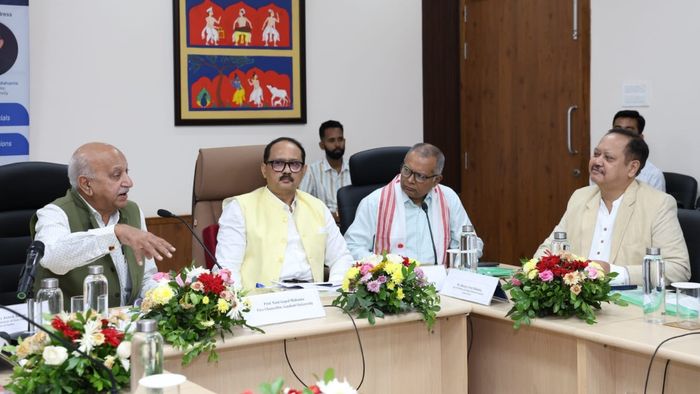
Akbar was delivering the keynote address at a national symposium on “West Asia in a Fragmented Global Order: Security Dynamics and Economic Implications” organised by Gauhati University. The event was attended by Vice Chancellor Nani Gopal Mahanta, along with academics, policy experts and other dignitaries.
In his address, Akbar referred to recent developments in the global energy and financial sectors, observing that traditional structures of influence are beginning to weaken amid changing geopolitical realities.
“The UAE stepping away from OPEC reflects a break from one of the most significant instruments of Western influence over global oil markets. In recent months, we are also witnessing challenges to the hegemony of the dollar. These developments signal a clear shift, where national interests are beginning to override long-standing, externally driven alignments,” he said.
Akbar further noted that institutions such as North Atlantic Treaty Organization and the United Nations, which have historically played central roles in maintaining international order, are increasingly finding it difficult to assert authority amid rapid geopolitical shifts.
“The world order is again in flux,” he remarked, pointing to the return of strategic contestation across regions.
Vice Chancellor Mahanta, speaking at the symposium, highlighted what he described as mounting pressure on the traditional foundations of American global leadership. He observed that both strategic dominance and ideological influence of the United States are increasingly being questioned in several parts of the world.
Referring to developments in West Asia, Mahanta said the United States, long viewed as a principal security provider in the Gulf region, is now facing scrutiny over its role and reliability. He also pointed to emerging differences within Western alliances, suggesting that weakening transatlantic cohesion could reshape future geopolitical alignments and create space for new power centres.
The symposium also featured a panel discussion on “West Asia in Transition: Power Shifts, Global Rivalries, and India’s Strategic Calculus.”
The discussion brought together experts from academia, security and strategic affairs, including former Assam Director General of Police Bhaskar Jyoti Mahanta, academicians Subhrajeet Konwer and Obja Bora Hazarika from Gauhati University, and strategic affairs expert Abhijan Das.
Panelists deliberated on the evolving geopolitical dynamics in West Asia, including intensifying regional rivalries, shifting power structures and their implications for India’s foreign policy and economic interests. Speakers underlined the need for a calibrated and pragmatic approach as India engages with a region increasingly shaped by uncertainty, strategic competition and emerging alignments.
The symposium concluded with discussions emphasising the role of academic institutions in promoting informed discourse on complex geopolitical and economic developments, particularly in strategically important regions such as West Asia.