New micro-moth species discovered in Assam after nearly a century
Researchers have identified Glyphipterix brevimucronata near Assam's Hollongapar Gibbon Sanctuary. The finding is India's first sedge moth taxonomic addition in nearly a century.
- Nov 19, 2026,
- Updated Nov 19, 2026, 11:28 AM IST
Assam’s biodiversity has received fresh scientific recognition with the discovery of a new micro-moth species near Hollongapar Gibbon Sanctuary, marking the first taxonomic addition to India's sedge moth family in nearly a century.
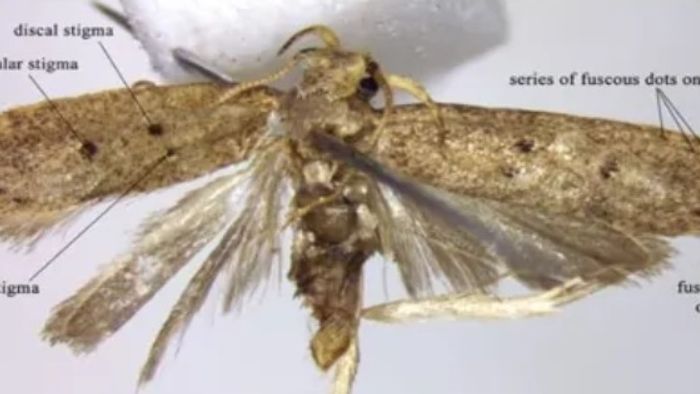
Named Glyphipterix brevimucronata, the species was discovered near Mariani in Jorhat district and collected on October 2, 2025, at an elevation of 141 metres during a field survey.
With a wingspan of just 6.5 millimetres, the moth has distinctive brown forewings with a yellowish metallic sheen and characteristic white markings.
The discovery was reported by Kishore Chandra Sahoo of ICAR-Indian Agricultural Research Institute (IARI), Assam, in a research paper published in the international journal Zootaxa. The field survey was conducted with the assistance of ICAR-IARI scientist Dr Abhijith K. P. and local guide Jayanta Jyoti Sarmah.
Researchers identified the species through detailed examination of its physical characteristics and male reproductive anatomy. Its scientific name, brevimucronata, refers to a distinctive short, pointed structure in its reproductive anatomy.
The discovery is significant as the sedge moth family, Glyphipterigidae, remains poorly documented in India. While more than 530 species have been described worldwide, only 25 had previously been recorded in India. The genus Glyphipterix itself comprises more than 400 described species globally, while its diversity in India remains inadequately studied.
Assam Forest Minister Jayanta Malla Baruah also shared the discovery, highlighting the state's rich biodiversity and the importance of scientific research in documenting its lesser-known species.
The discovery underscores how Assam's biodiversity extends beyond its well-known wildlife, with even tiny and relatively unexplored species offering new insights into the state's ecological richness. It also highlights the importance of habitat conservation and continued scientific exploration.