NFR interventions help save 255 elephants from train hits across northeast in nine months
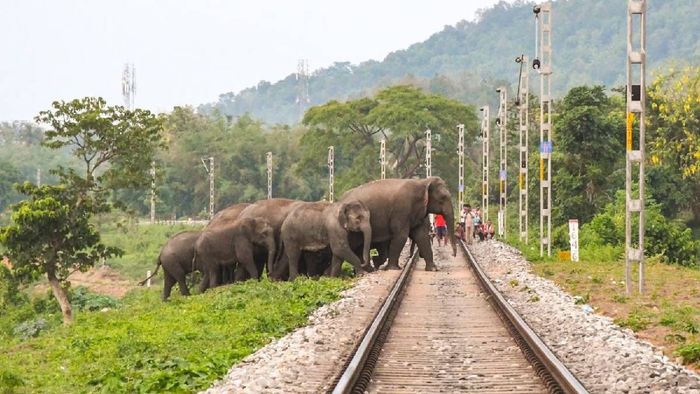
The Northeast Frontier Railway (NFR) has saved 255 elephants from potential train hits across its jurisdiction between January and September this year through enhanced vigilance, technology-based monitoring and coordination with forest officials, railway authorities said on Sunday, October 4.
- Oct 04, 2026,
- Updated Oct 04, 2026, 8:24 PM IST
The Northeast Frontier Railway (NFR) has saved 255 elephants from potential train hits across its jurisdiction between January and September this year through enhanced vigilance, technology-based monitoring and coordination with forest officials, railway authorities said on Sunday, October 4.
NFR chief spokesperson Kapinjal Kishore Sharma said the interventions were carried out across the Alipurduar, Rangia, Lumding and Tinsukia divisions, where railway personnel responded to alerts and reports of elephant movement near tracks.
The railway has strengthened measures to prevent elephant-train collisions in identified vulnerable stretches by combining technology-driven monitoring systems with ground-level surveillance and coordination with the forest department.
Among the key measures is an AI-based Intrusion Detection System (IDS) based on Distributed Acoustic System (DAS) technology. The system provides real-time alerts when elephant movement is detected in the vicinity of railway tracks, enabling railway personnel to take preventive action.
The NFR has also introduced night-time and temporary speed restrictions in areas where elephants are sighted. Enhanced patrolling, sensitisation of train crews, cautionary signage and vegetation clearance along vulnerable stretches are among the other measures being implemented.
The railway has deployed the ‘Plan Bee’ system at vulnerable locations, which uses amplified honeybee sounds to deter wild elephants from approaching railway tracks.
In addition, the NFR is constructing underpasses at identified locations to facilitate safer movement of wildlife and reduce the need for elephants to cross railway tracks.
Railway authorities are also conducting regular sensitisation programmes for train crews, railway staff, pantry car personnel and passengers to discourage the disposal of food waste near tracks. Such waste can attract elephants and other wild animals towards railway lines.
“Continuous coordination and real-time communication with the forest department further enable timely action whenever elephant movement is detected,” Sharma said.
The NFR said the combined use of technology, surveillance, speed regulation, infrastructure and inter-agency coordination has strengthened efforts to reduce the risk of elephant-train collisions across its jurisdiction.