Northeast can emerge as India's 'living lab' for tech, problem-solving: Himanta
Assam Chief Minister Himanta Biswa Sarma on September 25 said the Northeast can emerge as one of India's "living laboratories" for technology and practical problem-solving, as he launched the North East Seva Innovation Challenge (NESFIC) in Guwahati.
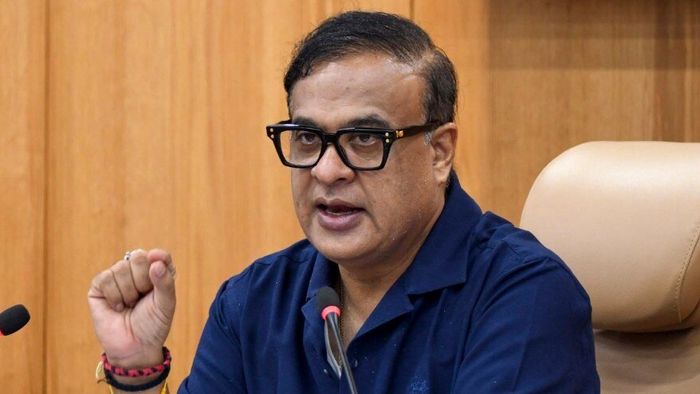
- Sep 25, 2026,
- Updated Sep 25, 2026, 8:35 PM IST
Assam Chief Minister Himanta Biswa Sarma on September 25 said the Northeast can emerge as one of India's "living laboratories" for technology and practical problem-solving, as he launched the North East Seva Innovation Challenge (NESFIC) in Guwahati.
Speaking at the launch of 'NESFIC-Ashtalakshmi for Viksit Bharat', Sarma said the initiative would provide a platform for young people across the region to identify real-world problems and develop solutions that can eventually be implemented.
"The Northeast can emerge as one of India's living laboratories for technology and problem-solving. A solution developed for flood management in Assam could potentially find applications in other parts of India, while a low-cost healthcare technology developed for remote communities could serve people far beyond the region," he said.
Sarma said NESFIC was not intended to promote innovation merely for creating new products, but to connect young innovators with problems faced by citizens, government departments and industries.
"A startup does not always begin in a large office or a corporate laboratory. It can begin in a hostel room, a college workshop or an institutional laboratory," he said, urging engineering colleges, polytechnics and ITIs across the Northeast to participate in the initiative.
Under NESFIC, 50 real-world challenges have been identified — 40 from government departments and 10 from industry organisations. The challenges are based on problems faced by government departments, industries and citizens.
Sarma said one of the key objectives was to create an opportunity for the government to become the first customer for young innovators. He said startups often struggle to enter government markets because conventional procurement requirements include criteria related to turnover, prior experience and bank guarantees.
Among the challenges identified by the Health and Family Welfare Department are early detection of pregnancy-induced hypertension, improving access to obstetric ultrasound in remote areas, infection control in labour rooms, faster identification and referral of sick newborns and early detection of congenital deformities.
"If a young engineer, doctor or startup can develop a solution that enables an ASHA worker in a tea garden or a char area to identify a health danger at an early stage, it would represent innovation at its highest level," Sarma said.
The Housing and Urban Affairs Department in Guwahati is also seeking technology that can automatically detect blocked culverts and help address urban drainage problems.
According to the roadmap announced by the chief minister, 150 startups will be selected at the Northeast Innovation Conclave in Guwahati in late November, with three startups shortlisted for each of the 50 challenges.
The selected startups will receive idea-stage support under the Assam Startup Policy and work with the respective problem owners using relevant data and testing sites. They will also receive mentoring support from partner institutions.
At the demonstration day in February next year, the best startup for each challenge will receive a minimum viable product (MVP) grant of Rs 20 lakh, while deep-technology solutions will be eligible for grants of up to Rs 40 lakh.
Sarma said NESFIC could help connect the Northeast's existing strengths with emerging technologies and create a pathway for innovative ideas to move from the concept stage to actual implementation.