PAN card, Voter ID alone cannot prove Indian citizenship, rules Gauhati High Court
The Gauhati High Court has ruled that a PAN card and an Electoral Photo Identity Card (EPIC) cannot, by themselves, establish Indian citizenship or prove family relationships unless supported by the records on the basis of which they were issued.
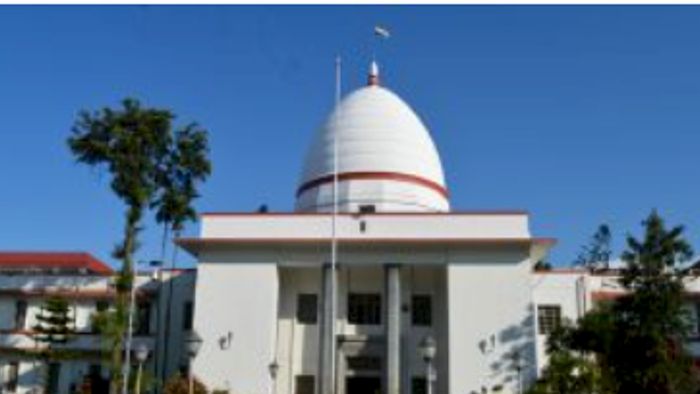
- Nov 13, 2026,
- Updated Nov 13, 2026, 2:48 PM IST
The Gauhati High Court has ruled that a PAN card and an Electoral Photo Identity Card (EPIC) cannot, by themselves, establish Indian citizenship or prove family relationships unless supported by the records on the basis of which they were issued.
Upholding a Foreigners Tribunal order declaring a woman from Assam's Darrang district a foreigner, the court dismissed her writ petition challenging the 2018 decision of the Mangaldai Foreigners Tribunal.
A division bench of Justice Kalyan Rai Surana and Justice Susmita Phukan Khaund observed that the documents submitted by the petitioner, Kulchan Begum, including her father's PAN card and voter ID and her own electoral identity card, were insufficient to establish her citizenship or her claimed relationship with her parents.
"The PAN card and EPIC exhibited by the petitioner are not proof of citizenship. These are documents that are issued upon self-application without any formal enquiry by the Income Tax Department and Election Commission of India," the court observed in its November 5 judgment.
The bench said such documents could not be accepted as proof of citizenship unless the records supporting their issuance were also established.
Begum had claimed that she was born on April 25, 1977, and brought up in Luitpar, Kharghuli, in Guwahati. She identified Sabed Ali and Jaheda Khatun as her grandparents and claimed that their names appeared in the 1966 and 1970 electoral rolls of Nosotra village in the then Kamrup district. She projected Abu Chand Mohammad, son of Ali, as her father.
To establish her citizenship, she relied on the 1966 and 1970 electoral rolls, her father's PAN card and EPIC, her own voter ID, a family ration card, the 2018 electoral roll and an acknowledgement receipt for her National Register of Citizens (NRC) application.
She also argued that her father was an Indian citizen whose name appeared in electoral records. He had contested the 2009 Lok Sabha election from Barpeta and the 2011 Assam Assembly election from Baghbar and had served as an elected councillor of the Guwahati Municipal Corporation in 2013.
The High Court, however, held that her father's electoral and political credentials did not establish her claimed relationship with him.
"A mere fact that the projected father of the petitioner had offered his candidature in Lok Sabha election and State Assembly election and that he was an elected ward member of the Guwahati Municipal Corporation, is not sufficient to prove that the petitioner has been able to establish her linkage with the said person," the judgment stated.
The bench also pointed to inconsistencies in the petitioner's projected family history and the ages recorded in electoral rolls. It noted that her claimed father's name first appeared in the 1997 electoral roll, where he was recorded as 50 years old.
The court further observed that there was no evidence establishing the continuous residence of her claimed grandparents and father in Assam between 1970 and 1997, a period of 27 years. It said the petitioner was required to establish their continuous residence in the state.
The judges also found that the documents failed to establish the necessary family linkage. A certificate issued by an Area Sabha representative was not proved by its author, while the ration card and the 2018 electoral roll were also found insufficient to establish her relationship with her claimed parents.
"None of the exhibited documents helps the petitioner discharge her burden under Section 9 of the Foreigners Act, 1946 to prove that she is a citizen of India and the daughter of Indian parents," the bench observed.
The court also rejected the NRC application acknowledgement submitted by the petitioner, noting that the final draft of the NRC had not been updated when the Foreigners Tribunal delivered its opinion.
The reference against Begum was registered in 2000 under the erstwhile Illegal Migrants (Determination by Tribunals) Act, 1983. It was subsequently transferred to the Foreigners Tribunal system after the Supreme Court struck down the Act in 2005.
Dismissing her writ petition and upholding the Tribunal's opinion, the High Court also recalled and revoked the interim bail granted to her on April 18, 2022.
Foreigners Tribunals in Assam are quasi-judicial bodies that adjudicate citizenship matters, with March 25, 1971, serving as the cut-off date for determining entry into the state. Orders declaring individuals foreigners can be challenged before the High Court or the Supreme Court.