Proposed delimitation may delay ST political reservation in Assam until 2051: Debabrata Saikia
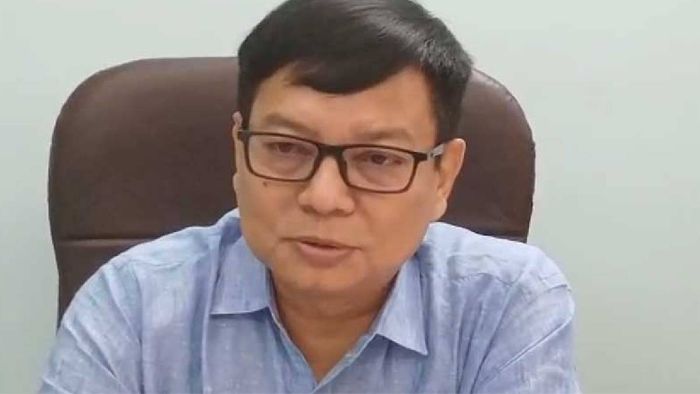
Former Assam Assembly Leader of Opposition and Congress leader Debabrata Saikia has raised concerns over the proposed 132nd Constitutional Amendment and Delimitation Bill, warning that the proposed changes could affect the political representation of Assam's six communities seeking Scheduled Tribe (ST) status.
- Nov 29, 2026,
- Updated Nov 29, 2026, 3:19 PM IST
Former Assam Assembly Leader of Opposition and Congress leader Debabrata Saikia has raised concerns over the proposed 132nd Constitutional Amendment and Delimitation Bill, warning that the proposed changes could affect the political representation of Assam's six communities seeking Scheduled Tribe (ST) status. He has urged the Centre to resolve the ST status issue before undertaking a fresh delimitation exercise, cautioning that the proposed changes could leave these communities without proportional political representation until 2051.
In a statement issued on Sunday, November 29, Saikia accused the BJP of attempting to redraw electoral constituencies for political advantage and alleged that the proposed legislation could undermine the federal balance. He also questioned the Centre's decision to link the implementation of women's reservation with delimitation and an expansion of parliamentary seats.
Backing the position taken by Congress leader and Leader of Opposition in the Lok Sabha Rahul Gandhi at his November 28 press conference, Saikia alleged that the BJP was seeking to use delimitation as an electoral tool amid allegations of electoral irregularities.
Referring to the 2023 delimitation exercise in Assam and Jammu and Kashmir, he claimed that principles such as geographical contiguity, public convenience and administrative considerations were overlooked. He said the boundaries of his Nazira Assembly constituency had been altered arbitrarily and that objections submitted to the Election Commission of India had not been addressed.
On women's reservation, Saikia maintained that the Congress supported the proposed reservation but opposed linking its implementation to delimitation and an expansion of the existing 543 Lok Sabha seats.
He also expressed concern that a proposed 50 per cent increase in parliamentary seats could reduce the time available to individual MPs to raise constituency-related issues in Parliament.
Questioning the implications for smaller states, particularly those in the Northeast, Saikia said an expansion based on the proposed formula could further widen the representation gap between states with larger and smaller parliamentary delegations.
He cited the example of Assam and Uttar Pradesh, pointing out that Assam currently has 14 Lok Sabha seats compared with Uttar Pradesh's 80. Under a proposed 50 per cent expansion, Assam's representation would increase to 21 seats, while Uttar Pradesh's tally would rise to 120, widening the difference from 66 to 99 seats.
A major concern raised by Saikia relates to the possible impact of the proposed constitutional changes on the six communities seeking ST status in Assam — Tai-Ahom, Chutia, Moran, Matak, Koch-Rajbongshi and Tea Tribes.
According to Saikia, if delimitation is completed before these communities are granted ST status, their populations may not be included in the Scheduled Tribe population figures used to determine reserved constituencies.
He said Assam's Assembly strength could increase from 126 to 189 seats, while its Lok Sabha representation could rise from 14 to 21 seats under the proposed expansion. However, he cautioned that the reservation of seats for Scheduled Castes and Scheduled Tribes could remain frozen until 2051 under the proposed constitutional framework.
At present, Assam has 19 Assembly constituencies and two Lok Sabha seats reserved for Scheduled Tribes.
Saikia argued that even if the six communities subsequently receive ST status under Article 342 of the Constitution, their inclusion would not automatically lead to an increase or readjustment in the number of reserved constituencies.
He warned that this could deny members of these communities proportional political representation for decades, potentially affecting an entire generation of young voters. He also said the situation could have implications for women's representation from these communities in ST-reserved constituencies.
Pointing out that the six communities were not enumerated as Scheduled Tribes in the 2011 Census, Saikia called for specific legal provisions in the proposed constitutional amendment to determine their revised population figures and facilitate the readjustment of reserved constituencies.
Saikia recalls earlier initiatives on ST status demand
Saikia also referred to previous efforts to grant ST status to the six communities, particularly the Koch-Rajbongshi community.
He recalled that during the tenure of former Assam Chief Minister Hiteswar Saikia and Prime Minister P V Narasimha Rao, the Koch-Rajbongshi community was granted ST status temporarily through a Presidential Ordinance issued on January 27, 1996. The ordinance was subsequently re-promulgated in March and June 1996 and January 1997.
He also cited the 1996-97 report of the Parliamentary Select Committee headed by Amar Roy Pradhan and initiatives undertaken during former Chief Minister Tarun Gogoi's tenure, including a unanimous resolution in the Assam Assembly, a government report submitted in 2005 and delegations of all-party representatives to the Centre.
Questioning the BJP's handling of the issue, Saikia said the party had failed to fulfil its commitment despite being in power in Assam and at the Centre for three consecutive terms.
He referred to the interim report of the Group of Ministers, tabled on November 29, 2025, which proposed categorising Scheduled Tribes into ST (Plains), ST (Hills) and ST (Valley).
However, he said the Assam government had failed to provide a definite timeline for granting ST status when the matter was raised in the state Assembly in July 2026.
Saikia also urged tribal organisations involved in the movement to make the government's written assurances public and ensure that their demands were pursued beyond election periods.
Existing tribal rights must remain protected, says Saikia
While advocating ST status for the six communities, Saikia stressed that the move must not compromise the existing constitutional and statutory rights of Assam's recognised Scheduled Tribes.
He said the educational, employment, land, political representation, autonomy and Sixth Schedule safeguards enjoyed by existing tribal communities must remain fully protected.
He also called on the state government to examine the objections raised by existing tribal organisations against the 2025 Group of Ministers' report before taking a final decision.
Eight demands placed before Centre and Assam government
Saikia outlined an eight-point charter of demands, urging the Central and Assam governments to address the concerns before proceeding with delimitation.
Among his key demands are resolving the ST status issue of the six communities before finalising the delimitation exercise, making public the status of the 2019 ST status Bill and announcing a clear timeline for its enactment.
He also sought an action-taken report on the recommendations of the Parliamentary Committee headed by Amar Roy Pradhan and called for special provisions in the proposed constitutional amendment to allow reserved seats to be readjusted even if ST status is granted after delimitation.
Further, he demanded legal safeguards for the existing rights of recognised Scheduled Tribes, publication of the views of the Centre, Registrar General of India and National Commission for Scheduled Tribes on the 2025 Group of Ministers' report, and a special discussion in the Assam Assembly to adopt an all-party resolution.
Saikia also urged MPs from Assam to seek clear legal guarantees from the Centre in Parliament on the issue of ST status and political reservation.
"The constitutional rights of Assam's communities are not an electoral gift. We demand legislation, not mere promises; constitutional guarantees, not verbal assurances," Saikia said, adding that the issue concerned social justice, federal rights and the political future of coming generations.