Scientific bamboo farming training held in Assam's Boko to boost farmers’ livelihoods
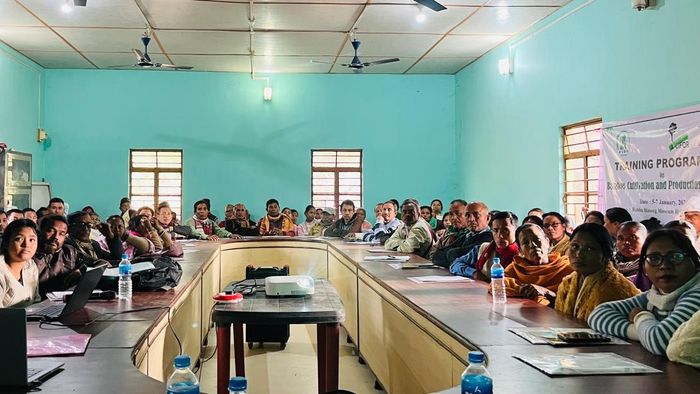
The Center for International Forestry Research and World Agroforestry (CIFOR–ICRAF), in collaboration with the Assam State Bamboo Mission (ASBM), organised a three-day Farmers’ Training Programme on enhancing bamboo farming and production in Assam from January 5 to 7 at the Conference Hall of the Rabha Hasong Museum in Boko.
- Jan 09, 2026,
- Updated Jan 09, 2026, 11:35 AM IST
The Center for International Forestry Research and World Agroforestry (CIFOR–ICRAF), in collaboration with the Assam State Bamboo Mission (ASBM), organised a three-day Farmers’ Training Programme on enhancing bamboo farming and production in Assam from January 5 to 7 at the Conference Hall of the Rabha Hasong Museum in Boko.
The programme aimed to strengthen farmers’ technical capacities in bamboo-based agroforestry systems, improve access to markets and financial services, and promote enterprise development under the Bamboo Outside Forest (BOF) initiative. The training focused on equipping farmers with scientific knowledge, sustainable practices, and livelihood opportunities linked to bamboo cultivation and production.
Key themes covered during the training included bamboo farming models, nursery management and quality planting material, harvesting and post-harvest practices, value addition, market and financial linkages, policy and regulatory frameworks, and emerging opportunities such as carbon markets and bamboo-based entrepreneurship. The sessions were conducted through expert presentations, interactive discussions, and hands-on learning modules.
Participants included local bamboo farmers, members of Farmer Producer Organisations (FPOs), women farmer groups, and farmer collectives from the Boko–Chaygaon co-district.
Addressing the valedictory session as chief guest, Sonaram Rabha, Chairman of the Rabha Hasong Autonomous Council (RHAC), Dudhnoi, said the Boko–Chaygaon region has a strong tradition of bamboo cultivation and significant potential for expansion. Sharing his own experience as a bamboo farmer, he encouraged participants to tap the growing market demand for bamboo to enhance farm incomes.
Executive Member of RHAC, Sumit Rabha, thanked CIFOR–ICRAF and the Assam State Bamboo Mission for organising the programme in the Boko area. He said the training provided hands-on exposure to scientific bamboo farming practices and highlighted livelihood opportunities through local value addition, particularly through linkages with the Bamboo Technology Park at Satabari, Chaygaon.
The valedictory session was also attended by B. Deuri, Assistant Commissioner, Boko–Chaygaon Co-district, and Dr. Arup Jyoti Kalita of CIFOR–ICRAF, who spoke on policy convergence and the role of bamboo-based agroforestry in sustainable rural development.
Technical sessions during the programme were conducted by experts from Assam Agricultural University (AAU), Central Silk Board (CSB), Assam Bio Ethanol Private Limited (ABEPL), NABARD, the Assam Forest Department, Bamboo Technology Park, Satabari, and CIFOR–ICRAF, along with bamboo entrepreneurs and sector specialists. The sessions focused on scientific cultivation, enterprise development, and supply–demand trends in the bamboo sector.
As part of the initiative, training kits and extension materials, including posters, booklets, and brochures, were distributed to participants to support continued learning and field-level adoption.
The training forms part of CIFOR–ICRAF’s ongoing engagement in Assam, in collaboration with the Assam State Bamboo Mission, to strengthen bamboo-based livelihoods, promote sustainable bamboo farming practices, and support the growth of a vibrant bamboo sector in the state.