The rise of ‘Mama’: How Himanta became Assam’s most powerful politician in 25 years of state politics
For a politician once dismissed as “too ambitious” by his rivals and even by some within his own party, Himanta Biswa Sarma completing 25 years in the Assam Legislative Assembly marks not just longevity, but one of the most dramatic political transformations in Northeast India.
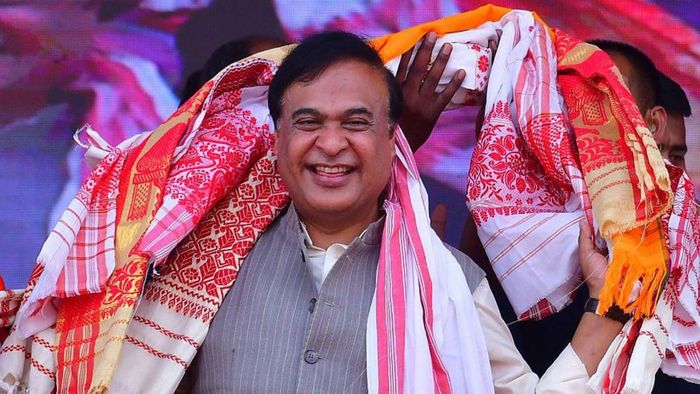
- May 13, 2026,
- Updated May 13, 2026, 3:01 PM IST
For a politician once dismissed as “too ambitious” by his rivals and even by some within his own party, Himanta Biswa Sarma, completing 25 years in the Assam Legislative Assembly, marks not just longevity, but one of the most dramatic political transformations in Northeast India.
From a fiery youth leader in the late 1990s to becoming the undisputed face of the BJP in Assam and the Northeast, Sarma’s political career has been defined by speed, strategy, controversy, survival, and electoral dominance.
Sarma’s electoral journey began with a defeat. In 1996, he contested from Jalukbari against his own mentor, Brighu Kumar Phukan, and lost. But after that setback, he never looked back.
From helping the Congress secure its best-ever tally of 78 seats in 2011 to leading the BJP to a historic mandate of 82 seats in 2026, Himanta Biswa Sarma’s rise has been gradual, calculated, and politically defining.
Sarma first entered the Assam Assembly in 2001 as a Congress MLA from Jalukbari, defeating veteran leader Bhrigu Kumar Phukan. At the time, Assam politics was largely shaped by Congress stalwart Tarun Gogoi and the shadow of insurgency, especially the ULFA years. Sarma quickly rose within the Congress government and earned a reputation as an aggressive administrator with a strong grip over bureaucracy and district-level politics.
As Health Minister under Gogoi, he became one of the most visible ministers in the state. He was credited with strengthening Assam’s healthcare infrastructure, expanding medical colleges, and improving institutional delivery rates. Later, he handled key portfolios including Finance, Education, and Planning, turning into the government’s principal troubleshooter.
But ambition soon collided with hierarchy.
The turning point came in 2014, when Sarma openly revolted against Tarun Gogoi’s leadership, accusing the Congress high command of ignoring grassroots realities and promoting dynastic politics through Gogoi’s son, Gaurav Gogoi. Images of Sarma leading dissident Congress MLAs to Delhi became symbolic of a collapsing Congress structure in Assam.
When the Congress leadership failed to reconcile differences, Sarma resigned from the party in 2015 and joined the Bharatiya Janata Party — a move that changed Assam’s political landscape permanently.
At that time, many saw him as politically finished in Upper Assam, where Congress had traditionally remained strong. Instead, Sarma engineered one of the BJP’s biggest regional expansions in India. He stitched together social coalitions among Assamese Hindus, tea tribes, Bengali Hindus, tribal communities, and sections of indigenous Muslims. He also became the BJP’s key strategist in the Northeast through the North-East Democratic Alliance (NEDA).
The 2016 Assam Assembly election became his redemption arc. The BJP defeated the Congress for the first time in the state, ending 15 years of Gogoi rule. Although Sarbananda Sonowal became Chief Minister, Sarma was widely viewed as the election’s chief architect.
As Finance and Health Minister in the BJP government, Sarma pushed massive infrastructure spending, welfare expansion, and fiscal restructuring. During the COVID-19 pandemic, his hyperactive administrative style — including late-night hospital visits, social media engagement, and direct intervention in crisis management — further strengthened his mass appeal.
In 2021, he finally took oath as Chief Minister of Assam. Following the BJP-led NDA’s massive victory in the 2026 Assam Assembly elections, Sarma again took oath as Chief Minister for a second consecutive term, further cementing his position as the BJP’s tallest leader in the Northeast.
Under his leadership, Assam witnessed aggressive infrastructure expansion, eviction drives against alleged encroachment, large-scale investment summits, rapid road construction, welfare digitisation, and an assertive law-and-order narrative. His government also pushed hard on cattle-smuggling crackdowns, child marriage cases, and border policing.
Politically, his success rate has been unusually high. Sarma has not lost an Assembly election in 25 years. He has remained central to almost every major political realignment in Assam since 2001. Beyond Assam, he emerged as the BJP’s principal strategist in the Northeast, playing influential roles in government formations in Manipur, Arunachal Pradesh, Tripura, and Nagaland.
Yet, his career has been equally marked by controversy.
Critics have repeatedly accused him of majoritarian politics, polarising rhetoric, and using state machinery aggressively against opponents. His comments on demographic change, madrassas, and “Miya politics” often triggered fierce backlash from opposition parties and civil society groups. Human rights activists also criticised eviction drives in places such as Darrang and Batadraba, alleging disproportionate force and displacement.
Sarma has also faced accusations of centralising power and blurring the line between governance and political campaigning. Opposition leaders frequently describe him as India’s most combative regional Chief Minister.
But supporters see the same traits differently — as decisiveness, administrative speed, and political clarity.
What makes Sarma’s journey remarkable is not merely his rise from Congress rebel to BJP strongman, but his ability to repeatedly reinvent himself while staying electorally relevant across shifting political eras — from insurgency-era Assam to the age of high-command-driven national politics and social media governance.
His growing popularity has also reflected in national perception surveys. According to the India Today–CVoter Mood of the Nation poll conducted in 2025, Sarma emerged as one of India’s highest-rated Chief Ministers, topping rankings among major states with around 44.6 per cent satisfaction in one survey cycle. Another Mood of the Nation tracker showed him recording approval ratings above 55 per cent earlier in 2025.
Twenty-five years after first entering the Assembly, Himanta Biswa Sarma remains what he has perhaps always been: the most influential and polarising politician Assam has produced in a generation.