Transgender, queer groups oppose amendment bill, demand immediate withdrawal
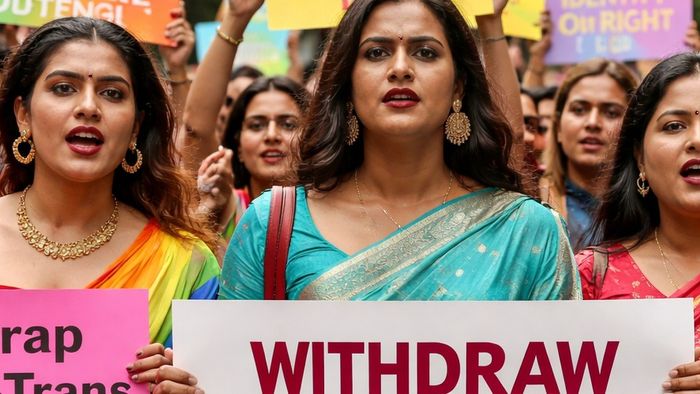
Transgender and queer collectives, along with individuals, on March 21 strongly opposed the Transgender Persons (Protection of Rights) Amendment Bill, 2026, calling it “discriminatory” and demanding its immediate withdrawal.
- Mar 21, 2026,
- Updated Mar 21, 2026, 11:34 PM IST
Transgender and queer collectives, along with individuals, on March 21 strongly opposed the Transgender Persons (Protection of Rights) Amendment Bill, 2026, calling it “discriminatory” and demanding its immediate withdrawal.
At a press conference, community representatives said the Bill proposes a restrictive redefinition of “transgender persons” that undermines self-identification and fails to recognise the diversity of gender identities.
“It collapses intersex and transgender identities into a single category, despite these being distinct experiences. It removes the right to self-identification, limiting legal recognition to specific socio-cultural identities such as Hijra, Kinnar, Aravani or Jogti, thereby excluding many others,” said spokesperson Prasant Meera.
The Bill also assumes individuals are forced into transgender identities through “coercion” or “undue influence,” a claim the community strongly rejected. Referring to the Supreme Court’s 2014 NALSA judgment, Meera said:
“Transgender is an umbrella term recognising persons whose gender identity differs from the sex assigned at birth. The Bill directly violates this principle by stripping away the right to self-determination.”
Another representative, Anamitra Bora, criticised the Bill for creating arbitrary classifications such as “genuine oppressed persons” and “those in actual need,” which, they said, reinforces unfounded claims of misuse while leaving many protections under the 2019 Act unimplemented.
The Bill’s requirement of medical scrutiny and mandatory disclosure of surgical information was also flagged as a violation of the fundamental right to privacy, citing the Puttaswamy judgment (2017), which guarantees bodily autonomy and decisional freedom.
Community members further highlighted that the amendments to Section 18 introduce stricter punishments for offences overlapping with existing criminal laws, potentially criminalising transgender individuals and their allies. The Bill proposes rigorous imprisonment of up to five years for “alluring” or “forcing” individuals to become transgender, despite no credible evidence of such incidents in India.
“The language used in the Bill is vague, broad and violates fundamental rights. If passed, it could lead to misuse and violence, affecting an already marginalised community and discouraging open expression of identity,” the representatives said.
Transgender communities in Assam, including culturally recognised identities such as Nupi Manbi and Nupa Manba in the Meitei community, are not recognised in the Bill. While the 2019 Act allowed self-identification, the amendments would remove this right entirely, erasing other identities such as trans men and trans-masculine people, trans women and trans-feminine people outside socio-cultural communities, non-binary, gender queer, and gender-diverse individuals.
“This Bill does not merely amend legislation; it threatens the dignity and existence of transgender communities in Assam and across the Northeast, reflecting a broader pattern of erasure in policymaking by the central government,” the spokespersons said.
The Transgender Persons (Protection of Rights) Amendment Bill, 2026 was introduced in the Lok Sabha on March 13 by Virendra Kumar, aiming to amend the Transgender Persons (Protection of Rights) Act, 2019.