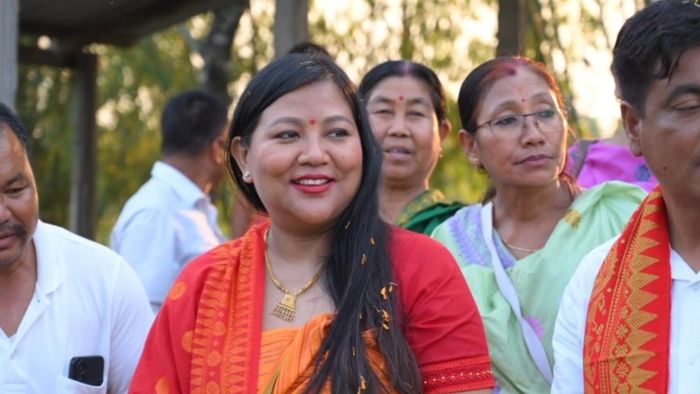
While husband Hagrama runs Bodoland, wife Sewli is now MLA
Sewli Mohilary won the Kokrajhar Assembly seat on a BPF ticket while Hagrama Mohilary remained BTC chief. The result leaves the Mohilary family holding offices in both the Bodoland council and Assam Assembly.
- May 10, 2026,
- Updated May 10, 2026, 1:58 PM IST
Sewli Mohilary's landslide victory from Kokrajhar creates an unusual political arrangement: Hagrama Mohilary holds the BTC chief executive's chair, while his wife now holds an Assembly seat from the same region.
There is a room somewhere in Kokrajhar where politics is quite literally a family matter. Hagrama Mohilary, chief of the Bodoland Territorial Council (BTC), heads one of the most consequential autonomous bodies in India's northeast. His wife, Sewli Mohilary, has now joined him in the business of governance, not as a consort, but as an elected member of the Assam Legislative Assembly.
Sewli Mohilary, a businesswoman who had never contested an election before, won the Kokrajhar Assembly seat on a Bodoland People's Front (BPF) ticket, defeating the sitting MLA, United People's Party Liberal's Lawrence Islary, by a commanding margin of 39,633 votes. The constituency, which serves as the BTC headquarters, had been held by UPPL in 2021 — making this result both a personal triumph and a signal of the BPF's resurgent grip over the Bodo political heartland.
Her entry into the race had drawn scrutiny from the moment she filed her nomination papers. The financial disclosures in her affidavit generated considerable public discussion: 37 bank accounts with deposits exceeding Rs 4.5 crore, over Rs 31 lakh in cash, investments in post office savings, mutual funds, and insurance, and 32 vehicles. Critics were quick to point to the 'dynasty card'. Supporters countered that she had managed significant business interests independently of her husband.
The BPF and Hagrama Mohilary had formally realigned with the BJP-led National Democratic Alliance ahead of the 2026 polls, parting ways with the UPPL, their coalition partner in the BTC government since 2020. This political pivot, which repositioned the BPF squarely within the NDA fold, gave Sewli Mohilary campaign infrastructure and political legitimacy that a debutant would ordinarily have to earn over years.
The BPF won ten of the fifteen Assembly seats in the Bodoland Territorial Region, with the NDA securing 14 out of 15 in that belt. The UPPL, which had been a coalition partner in the BTC, drew a complete blank.
Following the results, Hagrama Mohilary was clear about where the BPF's priorities lay. His party would not be bargaining for ministerial berths in the new state government, he said — only for the development of the BTC region. The remark was notable: it suggested that with his wife now in the legislature, the BPF's interests within the Assembly chamber would not go unrepresented.
Assam's political landscape has seen family arrangements before, but the Kokrajhar combination is unusual in its simultaneity. The BTC's chief executive, by statute, holds authority over the four Bodo-majority hill districts. The MLA for Kokrajhar sits in the state Assembly, which legislates for matters beyond the council's purview. The Mohilary household now has both positions covered.