World's most beautiful airport list features Guwahati's nature-inspired Terminal 2
The newly inaugurated Terminal 2 of the Lokapriya Gopinath Bordoloi International (LGBI) Airport has earned global recognition after being named among the world's most beautiful airports for 2026 by the prestigious Prix Versailles, celebrating its unique blend of modern architecture with Assam's rich natural and cultural heritage.
- Jul 16, 2026,
- Updated Jul 16, 2026, 4:26 PM IST
The newly inaugurated Terminal 2 of the Lokapriya Gopinath Bordoloi International (LGBI) Airport has earned global recognition after being named among the world's most beautiful airports for 2026 by the prestigious Prix Versailles, celebrating its unique blend of modern architecture with Assam's rich natural and cultural heritage.
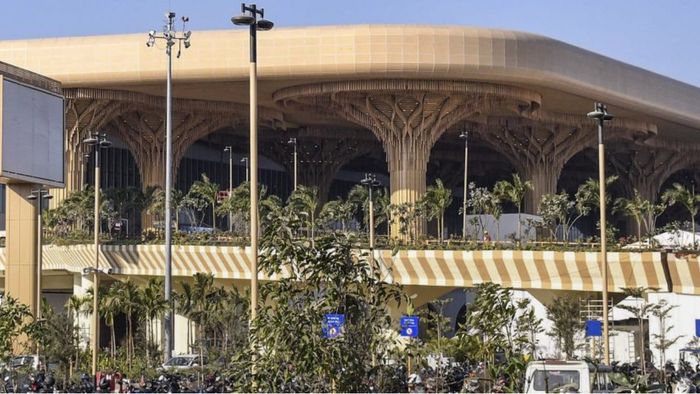
Inspired by Assam's iconic kopou phool (foxtail orchid) and the region's abundant bamboo, the terminal—aptly named "The Bamboo Orchids"—offers travellers an immersive experience that reflects the identity of Northeast India while delivering world-class aviation infrastructure.
From a distance, the terminal resembles an expansive bamboo forest, with towering concrete columns wrapped in bamboo-inspired cladding welcoming passengers. Inside, giant digital displays showcasing Assam's landscapes and biodiversity complement the nature-themed architecture, creating an airport experience that is as much about culture as it is about travel.
The international recognition places Guwahati alongside six other airports honoured by Prix Versailles, including Navi Mumbai International Airport, Guangzhou Airport (China), Frankfurt Airport (Germany) and Pittsburgh International Airport (USA). Both Guwahati and Navi Mumbai airports are managed by Adani Airport Holdings Limited (AAHL).
Prime Minister Narendra Modi inaugurated Terminal 2 in December 2025, while passenger operations commenced in March 2026. The architectural design was first unveiled during the Advantage Assam 2.0 Investment Summit in February 2025.
Passengers have welcomed the new terminal, with many describing it as a landmark that reflects Assam's identity. Visitors are frequently seen photographing its bamboo-inspired pillars, artistic interiors and spacious departure lounge.
"It is an absolute delight. Compared to the old airport, this is a huge transformation. It can now compete with airports in Mumbai, Bengaluru and other major cities," said Guwahati resident Sasanka Bordoloi, who recently travelled through the terminal.
Several passengers also expressed pride that Assam's heritage has been showcased through contemporary architecture rather than conventional glass-and-steel designs.
According to Adani Airport Holdings, nearly 140 metric tonnes of locally sourced bamboo have been incorporated into the terminal's construction, making it one of India's most prominent examples of nature-inspired airport architecture that seamlessly blends traditional craftsmanship with modern engineering.
Beyond its striking design, Terminal 2 is equipped with DigiYatra-enabled processing, smart check-in systems and expanded passenger facilities. It has been designed to handle 13.1 million passengers annually by 2032, significantly enhancing connectivity to the Northeast.
For many travellers, Guwahati's new Terminal 2 is no longer just a transit point but a destination in itself—celebrating Assam's natural beauty, cultural heritage and growing prominence on the global aviation map.