Scientists are discovering new species faster than ever: Study
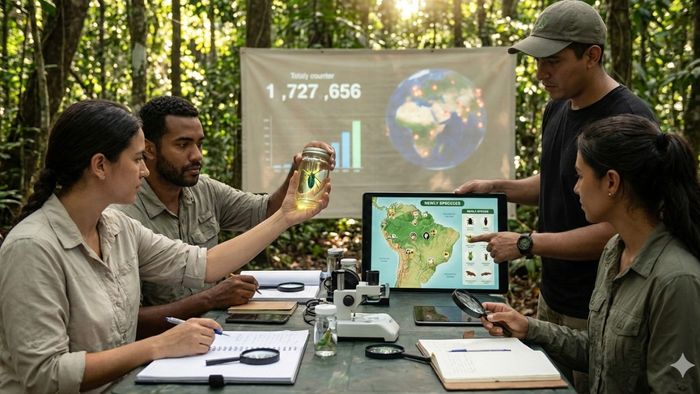
A global analysis of nearly two million known species has found that scientists are identifying new forms of life faster than at any point in history, with more than 16,000 species being documented every year.
- Dec 24, 2025,
- Updated Dec 24, 2025, 1:33 PM IST
A global analysis of nearly two million known species has found that scientists are identifying new forms of life faster than at any point in history, with more than 16,000 species being documented every year.
The study, led by researchers at University of Arizona, examined classification records across all major groups of living organisms. The findings, published in Science Advances, show that between 2015 and 2020—the most recent period with complete data—an average of over 16,000 new species were formally described each year.
This included more than 10,000 animals annually, along with around 2,500 plants and 2,000 fungi. The peak year was 2020, when scientists documented 17,044 new species.
The pace of discovery challenges long-held assumptions that science is close to cataloguing most life on Earth. “Documentation is the first step in conservation—we can’t safeguard a species from extinction if we don’t know it exists,” said senior author John Wiens, a professor of ecology and evolutionary biology at the University of Arizona.
Wiens said some scientists had argued that species discovery was slowing, suggesting that most organisms had already been found. “Our results show the opposite. We’re finding new species at a faster rate than ever before,” he said.
The researchers found no sign that this trend is levelling off. Instead, they suggest that biodiversity in several groups—particularly plants, fungi, arachnids, fish and amphibians—may be far greater than currently recognised.
Based on their projections, the total number of fish species could reach about 115,000, compared with roughly 42,000 described so far. Amphibians may number around 41,000 species, far above the nearly 9,000 currently known. The final count of plant species, the study suggests, could exceed half a million.
“Across life, the overall number of living, described species continues to increase rapidly, with little sign of slowing in recent decades,” the authors wrote.
The researchers also expect the rate of discovery to rise further as scientific methods improve. While most new species are still identified using visible physical traits, advances in genetic and molecular tools are likely to reveal many more “cryptic” species—organisms that appear similar but are genetically distinct.
This is expected to be particularly significant for bacteria and fungi, groups that remain vastly under-documented despite their ecological importance.