Assam's Mrigashree Baruah shines as first runner-up at Miss Grand India 2026
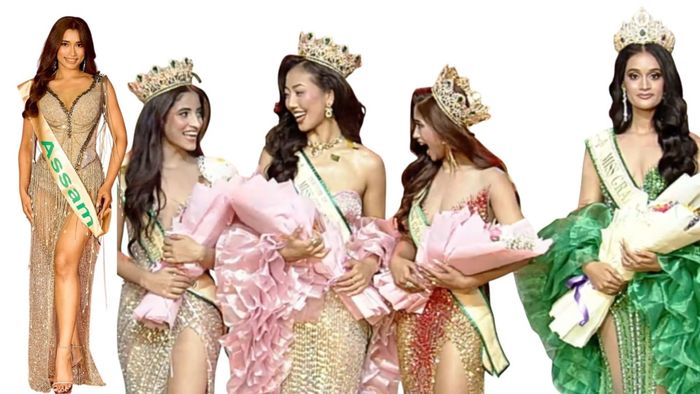
Assam's Mrigashree Baruah finished first runner-up as northeast contestants stood out at the Miss Grand India 2026 finale in New Delhi. Their strong showing and outspoken final answers brought regional representation, inclusion and safety issues into focus.
- May 13, 2026,
- Updated May 13, 2026, 12:33 PM IST
Northeast India had strong reason to celebrate at this year's Miss Grand India finale, with Assam's Mrigashree Baruah finishing as first runner-up and contestants from Meghalaya, Manipur, Sikkim, and other northeastern states making their presence felt on the national stage.
The fourth edition of Miss Grand India concluded on Tuesday, May 12, at Talkatora Stadium in New Delhi, with Tamil Nadu's Lakshita Thilagaraj, a 22-year-old computer science engineer from Chennai, being crowned the winner. She will now go on to represent India at Miss Grand International 2026 in October. Thilagaraj, who previously held the titles of Miss Universe Tamil Nadu 2024 and Miss Grand Tamil Nadu 2026, was praised for her poise and presentation throughout the competition.
Meghalaya's Tanvi Marak claimed second runner-up, while Saanjh Khurana of Uttar Pradesh, Reshmi Deokota of West Bengal, and Sneha Tamang of Sikkim placed third, fourth, and fifth, respectively — making the northeast's footprint in the top six considerable.
The pageant, which ran from April 29 to May 12, saw around 29 contestants from states and union territories compete across rounds, including talent, swimsuit, national costume, and a Bollywood-themed gala. The edition also marked the debut of several states on the Miss Grand India platform, among them Manipur, Tamil Nadu, Andhra Pradesh, Haryana, and Uttarakhand.
During the final question-and-answer round, northeast contestants delivered some of the competition's most pointed and personal responses.
Baruah of Assam spoke on inclusivity, calling for a shift in national culture. "We are not here to accept things but only here to present our opinions," she said, adding that she would want every Indian to be "open to knowledge, open to people, open to newness of life" — invoking Article 21 of the Constitution and its guarantee of the right to life with dignity.
Tamang of Sikkim addressed the issue of discrimination against people from the northeast directly. "We, the people of northeast, have been searching for equality for ages now, and this topic never ends. We are questioned about our skin. We are questioned about where we belong. We belong right here. We are from India," she said, urging the government to take the matter seriously.
Marak of Meghalaya took on the issue of sexual violence, calling for stricter laws. "Crimes such as rape do not deserve a second chance. The policy makers should make stricter laws because in crimes such as rape, justice and humanity must come first," she said.
Thilagaraj, for her part, made a case for peace and empathy education in schools. "India's diversity is not its weakness — it is its heartbeat," she said. "Hatred is not born, and neither is compassion. That is why I would like to teach peace and empathy to young children so that they can grow up and teach others."
Khurana of Uttar Pradesh argued for stronger protections for women's safety, saying that when safety remains a concern, women's empowerment is also constrained.
Thilagaraj succeeds Vishakha Kanwar of Rajasthan, who held the title from the previous edition.