Dharmendra was ‘sweet and grounded’ on Ikkis sets: Suhasini Mulay at Guwahati event
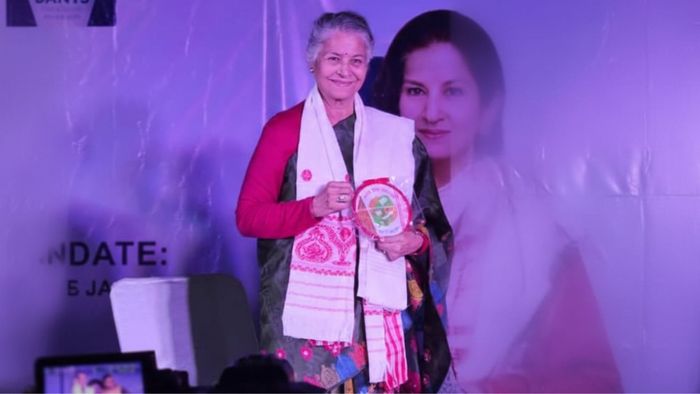
Mulay was responding to a question by India Today NE during an interaction at the Gauhati Press Club, where she was asked whether the film now held a different meaning for her and what she remembered most about working with Dharmendra.
- Jan 12, 2026,
- Updated Jan 12, 2026, 10:55 PM IST
The release of Ikkis has acquired a deeper emotional resonance following the death of veteran actor Dharmendra, National Award-winning filmmaker and actor Suhasini Mulay said.
Mulay was responding to a question by a journalist from India Today NE during an interaction at the Gauhati Press Club, where she was asked whether the film now held a different meaning for her and what she remembered most about working with Dharmendra.
“We never imagined Ikkis would be his last film,” Mulay said, describing the actor as “very sweet and grounded”. “Despite being such a big star, there was no ego at all.”
Directed by Sriram Raghavan, Ikkis is a biographical war drama based on the life of Param Vir Chakra awardee Arun Khetarpal. The film released on January 1, over a month after Dharmendra passed away at the age of 89. Mulay played his onscreen wife.
Speaking about the film’s narrative choices, Mulay said Ikkis avoided demonising the enemy. “The Pakistanis are shown as humans, not ghosts or demons,” she said, adding that the makers faced trolling for this portrayal. “That’s the reality today. You make films like this, you get trolled. You make The Kashmir Files, you get tax benefits.”
Mulay also laid out what she believes makes a film effective. “It must not bore the audience. What the director wants to say should reach them. And it should make people think after they leave the theatre,” she said.
Criticising the current trend in commercial cinema, the Lagaan actor said films have become increasingly political. “Ideologically right-wing narratives, religious dominance and excessive violence have become normal,” she said, raising concerns over the growing “otherisation” of minorities and indigenous communities.
At the same time, Mulay welcomed the impact of digital platforms on filmmaking. “With smartphones in every hand, everyone can speak now. That makes cinema more democratic,” she said.
A recipient of five National Awards, Mulay said she hopes to direct a feature film, calling it an “adhura sapna” she still intends to fulfil.
She also expressed concern over press freedom in the country. “Media freedom is under attack. Journalists are being arrested for asking questions,” she said. “There seems to be no space left for discussion or dissent.”